
 English
Finger bits come in two broad families that do similar work in very different ways. An M14 finger bit screws onto a hand-held angle grinder for template work; a CNC finger bit mounts in a machining centre and runs a programmed path. Choosing between them is less about which is better and more about which machine you have and how much precision the job needs.
The mounting difference
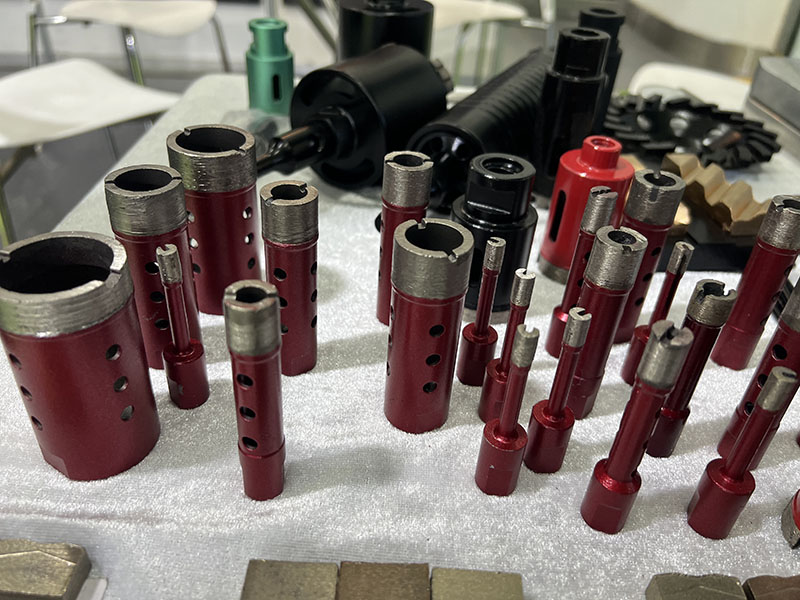
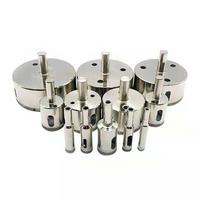
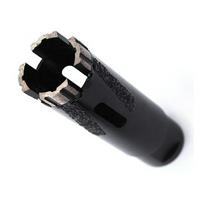
The M14 finger bit uses an M14 threaded shank - the standard on most European angle grinders and polishers - so it screws straight onto a hand tool. The CNC finger bit uses a plain shank or a specific tool-holder format designed to be gripped by a collet in a machine spindle. That difference in mounting drives everything else: an M14 bit is made for the operator's hand, a CNC bit for a controller's path. An M14 thread diamond finger bit is the hand-held type.
Precision and control
- CNC: the machine holds the line, so the path is consistent and repeatable, run to run. A cutout made on a CNC matches the drawing exactly, and the same program produces the same result every time.
- M14 hand-held: the operator follows a template or a marked line. Precision depends on the template, the operator's steadiness and the tool's control - good enough for many jobs, but not identical from piece to piece.
Coolant and setup
Both types need water, but the delivery differs. A CNC machine usually has an integrated water feed and a table to hold the workpiece, so cooling and support are built in. A hand-held M14 setup relies on the operator to feed water and to clamp and support the piece - which is where most hand-work problems start. Neither method forgives running dry; the difference is how easily water is maintained.
Where each type shines
- M14 finger bit: site work, one-off cutouts, repairs, jobs where the piece cannot go to a machine, small shops without a CNC.
- CNC finger bit: production, repeatable cutouts, complex shapes, high volume, any job where consistency across many pieces matters.
- Both: sink cutouts, holes, edge shaping and milling where a rotating bit follows a path.
Many shops use both: the CNC for production and an M14 setup for on-site work and repairs.
Choosing a bit within each family
- Match the diamond layer to the material - hard porcelain and quartz need a harder-wearing layer than softer stone.
- Match the bit diameter to the kerf or hole you need.
- Check the coolant arrangement works with your machine or your hand technique.
- Buy from a range that stocks both formats so a job is not held up by the wrong shank.
For the cutting technique itself, whichever bit you use, see diamond finger bits for granite sink cutouts.
Safety
Both setups throw water, slurry and dust, so wear eye protection and a dust mask or respirator, use an RCD or GFCI, and keep leads clear of water. On a hand tool, clamp the workpiece and keep hands clear of the bit; on a CNC, follow the machine's safety procedures and guards. Respect the bit's speed rating and follow the manufacturer's instructions.
Which finger bit, in short
- Hand-held or site work: M14 finger bit.
- Production and repeatability: CNC finger bit.
- Both need water, support and the right diamond for the material.
- Browse the diamond bit range for both formats.