
 ES
ESCutting a sink opening is one of the highest-risk jobs in stone fabrication. The cutout weakens a countertop at exactly the point where it spans the cabinet, and a crack here ruins a finished piece. Diamond finger bits exist to make that cut accurately and with controlled heat, following a template so the opening matches the sink and the edges stay clean.
What a finger bit is
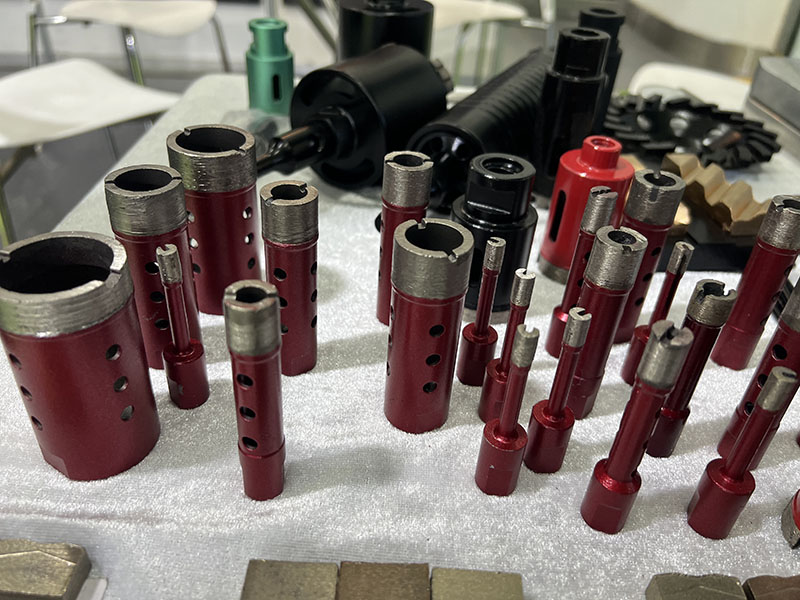
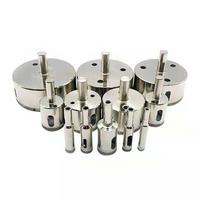
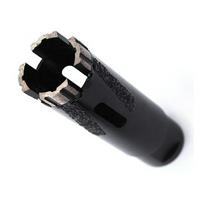
A finger bit is a slender diamond tool - usually a small cylinder or a tapered 'finger' - that mills a groove or cuts a hole when guided along a template. Against a template or a CNC path, the bit plunges into the stone and travels around the shape, cutting a kerf that opens the sink opening. An M14 thread diamond finger bit fits an angle grinder for template work, while other formats fit CNC and edge machines.
Setting up the cutout
- Measure from the sink, not the drawing. A cutout that is a few millimetres off leaves a reveal that looks wrong or a sink that does not seat.
- Mark and position the template so the opening sits centred over the cabinet, with the same reveal on all sides.
- Support the slab fully. A cutout done on an unsupported panel is far more likely to crack - the piece needs support all round, and the drop-out needs support underneath.
- Drill a starter hole large enough for the bit to enter where the sink opening allows, so the bit is not forced to plunge into solid stone without relief.
- Clamp the template and the slab so neither can move during the cut.
Cutting technique
- Keep water flowing to the bit at all times; a dry finger bit heats fast and the thin stone around a cutout has little tolerance for it.
- Feed steadily along the template without forcing; the bit should mill the stone, not be pushed through it.
- Work in stages if the stone is thick or hard, taking a first pass and then a deeper one rather than one heavy cut.
- Keep the bit perpendicular to the surface; tilting it cuts an angled wall that the sink will not sit flush against.
- Support the drop-out as you near the end so it does not fall and take the corner of the countertop with it.
- Clean up the opening and check the sink fits before going further - fixing a cutout later is not possible.
Why water and support matter so much
Two failures account for most ruined sink cutouts. The first is heat: without water, the bit and the stone overheat, and a crack starts at the edge of the cut. The second is lack of support, either under the slab or under the drop-out, causing the piece to flex and fracture. Both are preventable with a steady water feed and proper support - the cutting itself is the easy part. For the wider technique, see M14 finger bits vs CNC finger bits.
Safety
Cutting a countertop produces water, slurry and dust, so wear eye protection and a dust mask or respirator, use an RCD or GFCI for the tool, and keep leads away from water. Support the workpiece properly so it cannot shift or fall, keep hands clear of the bit and the blade path, and respect the tool's speed. Follow the manufacturer's instructions for the bit and the material - a stone panel that fails mid-cut is dangerous as well as expensive.
Finger bits in short
- Measure from the sink, support the slab, clamp the template.
- Keep water flowing and feed steadily without forcing.
- Support the drop-out and check the fit before finishing.
- Match the bit and thread to your machine - browse the diamond bit range for finger bits and accessories.