
 ES
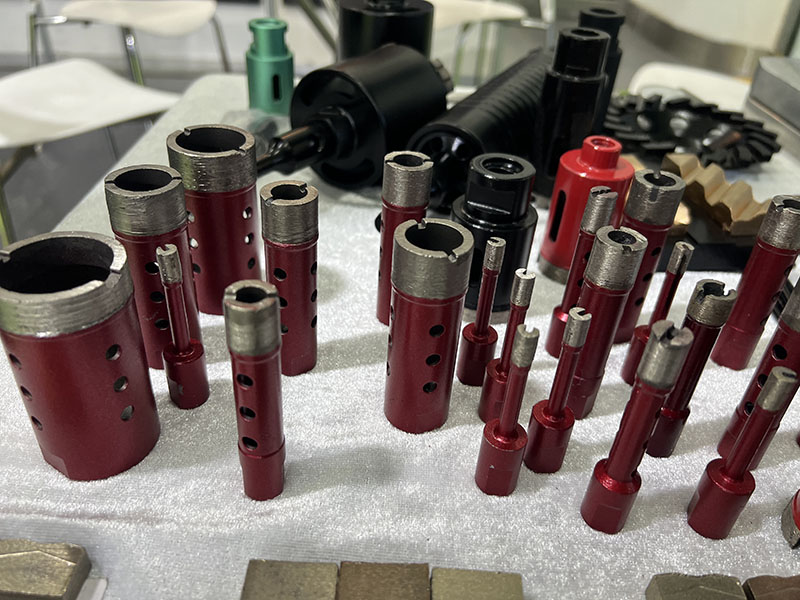
ESWater does three jobs on a diamond core bit: it pulls heat out of the crown, flushes the slurry cut from the hole, and keeps airborne dust down. Skip it, or feed it too weakly, and the bit tells you quickly - the crown discolours, the cut slows, and the diamond starts to strip off before it has earned its keep. Getting the water right is one of the simplest ways to extend bit life.
Why water matters more than it looks
Diamond is hard but heat-sensitive. Without coolant the crown temperature climbs until the bond softens and the diamond falls out, or until the metal around it glazes and stops cutting. Water also carries the fine slurry away; if that slurry packs into the kerf, the bit rubs instead of cutting and generates more heat again. On a sintered core bit the water is what lets the matrix wear back at a controlled rate, so fresh diamond keeps showing at the cutting edge.
How much water is enough
There is no single number that fits every bit, but the practical test is simple: you should see a steady stream of milky slurry leaving the hole while drilling. A trickle that evaporates before it reaches the crown, or a spray you have to stop to refill, is not cooling - it is decoration. If you can hear the bit squealing or see steam, you are already under-cooled.
Signs of poor cooling
- Steam or a hissing sound at the hole.
- A blue or straw-coloured tint on the rim - classic heat damage.
- Cutting speed that drops off partway through a hole.
- Slurry that cakes into a paste instead of washing away.
- Chips or a rough, spalled exit edge.
Ways to feed water
- Through-spindle feed: the best option on wet polishers and core drills. Water travels down the spindle and out at the bit, so it always reaches the crown.
- Gravity or pressure tank: useful where there is no mains feed; keep the tank above the work so the head of water helps.
- Water collar or shroud: an M14 collar or a dust shroud with a water port directs flow to the cut on an angle grinder.
- Manual squeeze bottle: acceptable only for a single small hole in soft material, never for hard porcelain or deep cores.
Setup that keeps the water useful
- Let the bit reach the water before it reaches the material - start the flow, then start the cut.
- Keep water flowing through the whole hole, not just the first few millimetres.
- Use a tray, dam or sponge to manage runoff and keep the working area safe and visible.
- Clear the flutes if slurry builds up; blocked flutes starve the crown of both water and clearance.
- Never run a wet bit dry and never flood a bit rated for dry use - the bond is designed for one condition.
Dry versus wet, briefly
Wet drilling wins on hard porcelain, deep holes, large diameters and any job where a cool, clean cut matters most. Dry drilling is for small diameters and jobsites where water is impossible. If you are working dry, our dry drilling speed and pressure guide covers the technique that replaces water; if you are drilling dry stone, a dry core bit for granite and marble is built for it.
Safety
Water and power do not mix, so use an RCD or GFCI on the supply and keep leads and plugs well clear of the runoff. Wear eye protection against spray, a dust mask or respirator for any dry phase, hearing protection if you are using an angle grinder, and clamp the workpiece. Manage the water so the floor stays safe underfoot, and follow the manufacturer's instructions for coolant flow and RPM. If the bit stops cutting cleanly, check the hole saw troubleshooting guide before buying a replacement.