
 ES
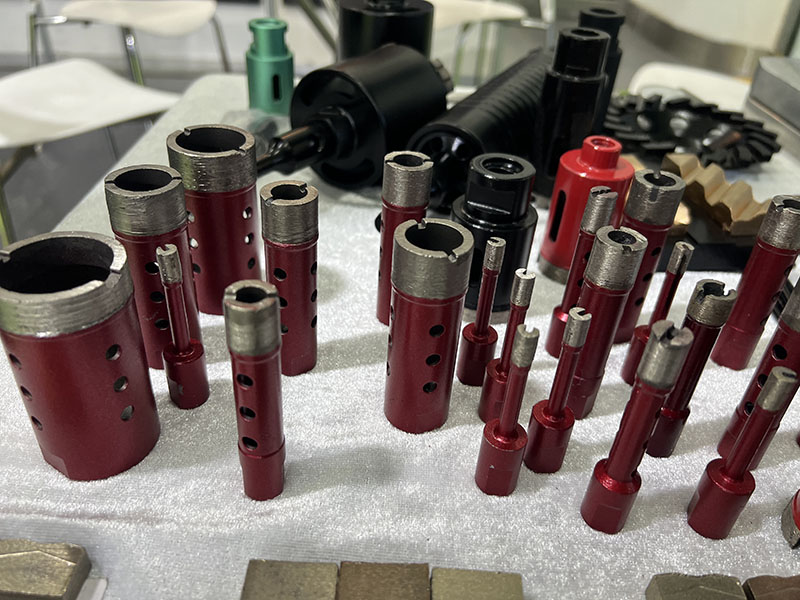
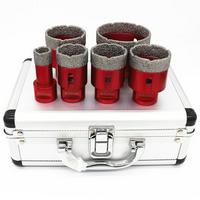
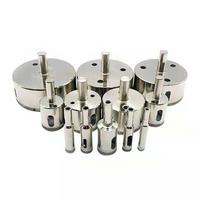
ESGlass and ceramic are the two materials most likely to punish a drill bit, yet the tool that handles both best is also the simplest. An electroplated diamond core bit is a thin steel tube with a single layer of diamond bonded to its edge, and that thin wall is the whole point: it removes less material, cuts faster and loads the surrounding glass or glaze far less than a thick sintered crown.
How electroplating works
Instead of mixing diamond into a metal matrix that wears back over time, electroplating nickel-bonds a single layer of diamond onto the surface of the steel body. The bit is sharp from the first turn and stays free-cutting because there is nowhere for swarf to pack and glaze. The trade-off is life: once the single layer of diamond is worn or knocked off, the bit is finished - it cannot be dressed back to expose fresh grit the way a sintered bit can.
That makes electroplated bits fast, clean, and best suited to materials that are hard but not highly abrasive. A thin-wall electroplated core bit is built exactly for glass, ceramic tile and similar materials.
Why they suit glass
Glass cracks when the drilling load concentrates in one spot, so the thinner the cut the better. An electroplated tube has a narrow kerf, works with light pressure and produces a fine, clean hole with minimal chipping - the three things glass needs. It is also the reason these bits are the default for mirrors, glass shelves, aquariums and glass tile where a chipped edge would be immediately visible.
On ceramic and porcelain tile
The same advantages apply to tile, especially glazed ceramic where chipping shows. Electroplated bits drill ceramic and softer porcelain quickly and leave a tidy edge. Their limitation appears on very hard, dense porcelain and on large batches: a sintered bit lasts longer because its diamond is buried through a thick matrix rather than sitting on the surface. For occasional holes in tile, electroplated is the fast, clean choice; for production drilling of hard porcelain, sintered pays off.
Where electroplated bits struggle
- Abrasive materials: concrete, sandstone and plaster wear the single layer away fast.
- Heavy production: there is no matrix to wear back, so life is finite on any material.
- Re-dressing: a glazed sintered bit can be recovered; a spent electroplated bit cannot.
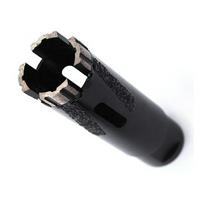
For concrete, brick and dense stone, choose a vacuum brazed or sintered core bit instead.
Drilling glass without cracking it
- Use plenty of water to cool the bit and flush the hole; glass heats up and fails quickly without it.
- Run at low RPM - heat, not speed, is what cracks glass.
- Apply light, steady pressure and let the diamond work. Pushing hard is the fastest way to a crack.
- Start at an angle to catch the surface, then straighten up once the groove is established.
- Support the back of the glass with a board or scrap and ease off as the bit breaks through.
- Keep the bit moving in a gentle circular motion rather than holding one spot.
Safety
Glass breaks into sharp fragments, so wear eye protection and cut-resistant gloves, and clear the work area. Use a dust mask or water suppression for tile dust, keep water away from electrical connections and follow the manufacturer's instructions for RPM and feed. Handle glass edges with care throughout - a clean hole is worth nothing if the panel cracks in your hands.
Choosing between electroplated and sintered
- Glass, mirrors, glazed ceramic, occasional holes: electroplated.
- Hard porcelain, dense stone, repeat production: sintered or vacuum brazed.
- Small diameters and fine edges: electroplated.
- Large diameters and long life: sintered.
Both sit inside the wider diamond drill bit range, so match the bit to the material rather than buying the first one that fits the thread. If a glass hole cracks or a tile hole chips, work through our hole saw troubleshooting guide before blaming the bit.