
 ES
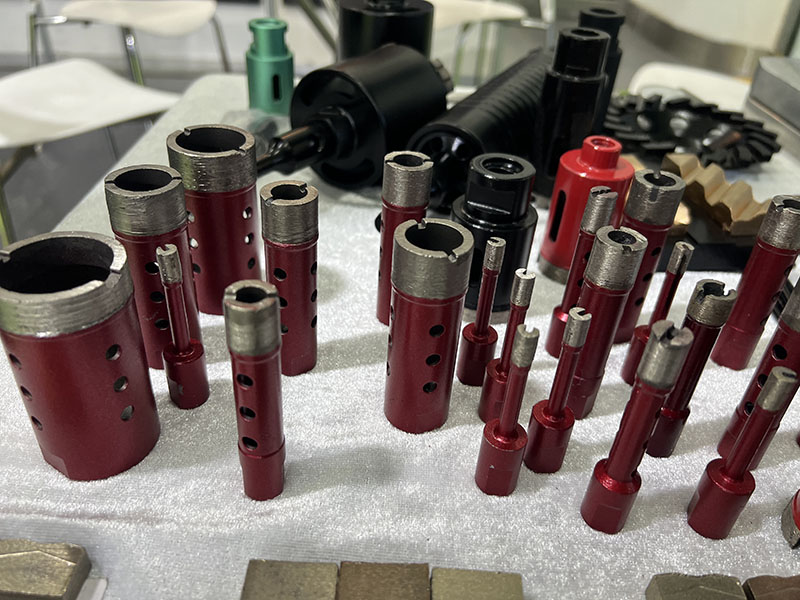
ESMost advice about core bits splits them into two camps: segmented crowns for speed and continuous rims for finish. Turbo segments sit between the two, and for stone and tile work that middle position is often the most useful place to be. The rim is continuous enough to hold the glaze, yet slotted enough to clear dust and heat - which is exactly what a hard, brittle tile demands.
What a turbo segment actually is
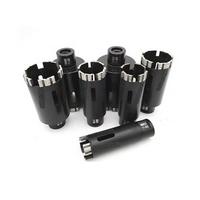
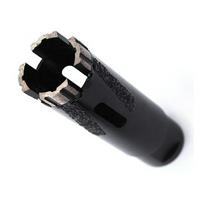
A turbo rim is a continuous band of diamond with shallow angled slots cut into it at regular intervals. Those slots are narrower and more numerous than the deep gullets of a conventional segmented crown, so the bit keeps more diamond in contact with the material than a heavy segmented bit but still has a path for debris to leave the kerf. The result is a cut that is smoother than a segmented rim but faster than a plain continuous one.
On a core bit that geometry matters more than it does on a saw blade, because the bit has to drill into a flat surface rather than slice through an edge. A turbo segment core bit puts that rim on a cylindrical body so the whole circumference works at once.
The benefits on stone and tile
- Less chipping on entry: the many small slots break the cutting load into finer increments, so the bit is less likely to catch and blow out the glaze.
- Better heat control: the slots let air or water reach further into the cut than a solid rim can.
- Cleaner exit: a smoother crown leaves a tidier hole on the far side, which saves patching on visible work.
- Reasonable speed: turbo bits run noticeably faster than a continuous rim on hard porcelain and granite.
Where they beat the alternatives
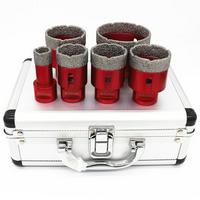
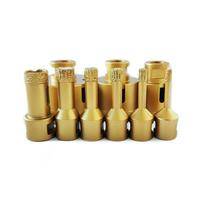
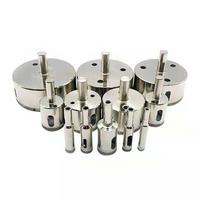
If you are drilling hundreds of holes in green concrete, a heavy segmented bit will outlast a turbo. If you are drilling glass, a thin continuous or electroplated bit gives the finest edge. The turbo segment earns its place in the middle: porcelain and ceramic tile, granite and marble, sanitaryware and stone work where the hole will be seen and the material is hard enough to chip. For an overview of the wider range, see the diamond drill bit category.
Using a turbo core bit well
- Start the bit at a shallow angle to scribe a crescent into the surface, then bring it upright once it has a groove to follow.
- Keep water flowing on wet cuts; on dry cuts, lift the bit every few millimetres so the slots can throw dust out.
- Match the RPM to the diameter - a large turbo bit at full grinder speed heats the rim faster than the slots can cool it.
- Use steady pressure rather than force. If the bit stops cutting and starts polishing, ease off and let the diamond bite again.
- Back the exit side with an offcut or board to stop breakout.
Turbo versus the rest, in one line
Segmented for the roughest, longest-lived cuts; continuous for the finest edges; turbo when you want speed and finish at the same time in stone or tile. That is the trade-off, and turbo is the compromise most tile and stone installers actually want.
Safety
Drilling stone and tile produces silica dust, so wear a dust mask or respirator alongside eye and hearing protection. Clamp or support the workpiece, keep water away from electrical fittings, respect the bit's RPM rating and follow the manufacturer's instructions. Before a big batch of holes, read our dry drilling speed and pressure guide so the rim lasts the job.