
 ES
ESA diamond hole saw rarely fails without warning. It slows, it gets hot, it starts to wander - and each of those symptoms points at a specific cause you can fix before the bit or the workpiece is ruined. Working through the symptoms in order, rather than reaching straight for a new bit, saves both money and material.
Symptom: the bit drills slowly or stops cutting
The most common complaint is a bit that cut fine on the first hole and now barely scratches the surface. In practice there are four usual causes:
- Glazed bond: the rim has polished smooth and the diamond is buried. Usually caused by too little pressure or too high a speed, letting the bond rub instead of wear.
- Wrong material: an electroplated or soft-bond bit that was fine on ceramic can stall on dense porcelain or hard stone.
- Over-pressure: pushing too hard packs the flutes with dust, so the bit rubs rather than cuts.
- Worn diamond: on an electroplated bit the single layer is simply used up; nothing will bring it back.
A glazed bit can often be recovered by feeding it firmly into an abrasive surface for a moment to strip the glazed layer - see why blades glaze over and how to dress them. If the diamond layer is gone, replacement is the only fix.
Symptom: the bit and the workpiece get hot
Heat in a hole saw almost always means the cut is generating friction faster than it is removing heat. That comes down to cooling and speed:
- Not enough water on a wet bit, or running a wet bit dry.
- Spinning too fast for the diameter, so surface speed at the rim is excessive.
- Pushing too hard so the bit rubs and loads the tool.
- Dust-packed flutes that stop coolant reaching the crown.
If the rim has turned blue or straw-coloured, the bond has been heat-damaged and will not hold diamond as well from then on. Fix the cooling first: see our water cooling tips for diamond core drilling, and on dry cuts lift the bit regularly to clear dust.
Symptom: uneven or excessive wear
How a bit wears tells you how it was used:
- Even wear around the rim: normal, expected life.
- Wear on one side: the bit was not held square, or the tool ran with run-out.
- Cracked or lost segments: impact from forcing the bit, or drilling without support and catching on break-through.
- A polished rim with no progress: glazing, as above.
- Diamond stripped off the edge: overheating or an abrasive material the bit was not made for.
Symptom: the hole wanders or chips the surface
A bit that skates on entry chips the glaze before the cut begins. Start at a shallow angle to cut a groove, use a pilot or centre bit if the saw has one, and never start a large bit at full speed on a flat glazed surface. If the hole wanders, check for a bent arbor, a worn thread or too much pressure on one side.
Choosing a bit that will not repeat the problem
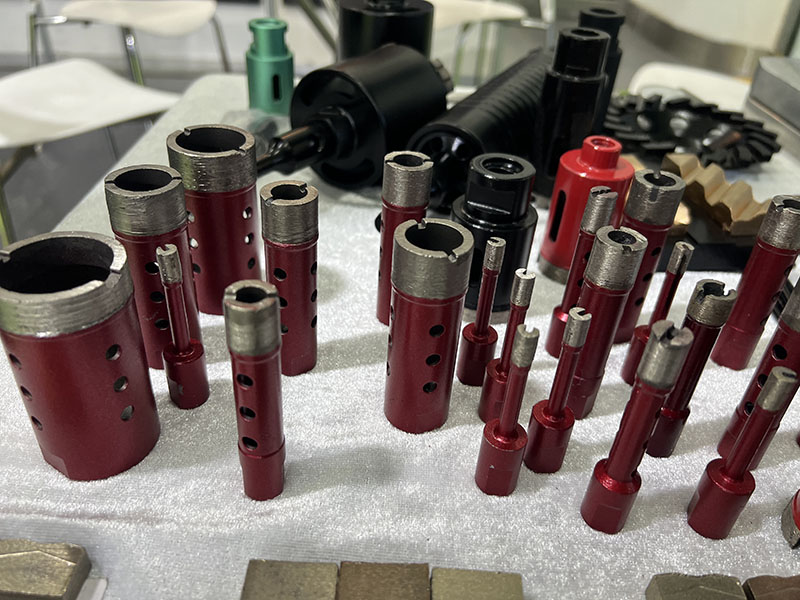
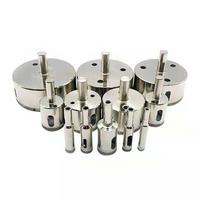
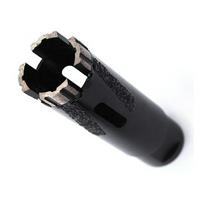
If one bit keeps failing the same way, the material is asking for a different spec. For hard porcelain and stone, a sintered M14 core bit holds diamond through a thick matrix and survives far more holes than a thin electroplated one. For fast, clean cuts in ceramic and glass, an electroplated bit is the right tool - just do not expect it to outlast its single diamond layer.
Safety
Wear eye protection, a dust mask or respirator and hearing protection, clamp or support the workpiece, use the tool's side handle and respect the bit's RPM rating. If a bit seizes, release the trigger and let it stop before pulling it out - forcing a jammed bit is how workpieces crack and wrists get hurt. Follow the manufacturer's instructions for the material and cooling method.
Troubleshooting in short
- Slow cut: glaze, wrong bit, over-pressure or worn diamond.
- Hot cut: cooling, speed or pressure - fix cooling first.
- Uneven wear: not square, run-out, or impact damage.
- Chips and wandering: entry technique and bit support.
- Repeat failures: match the bit type to the material via the diamond drill bit range.