
 ES
ESDrilling stone dry removes the one thing that usually keeps a core bit alive: water. With no coolant carrying heat away from the crown, everything depends on the bond, the rim geometry and how the operator feeds the bit. Granite and marble make that hard in two completely different ways, which is why the same dry bit rarely suits both materials equally well.
Why dry drilling changes the rules
A wet core bit relies on a constant water feed to flush cuttings and pull heat out of the cut. Drill dry and the dust stays in the kerf unless the bit physically ejects it, and the crown temperature climbs fast. The bond has to wear back at exactly the right rate so fresh diamond keeps appearing; too slow and the bit glazes over and stops cutting, too fast and the diamond falls out before it has done any work.
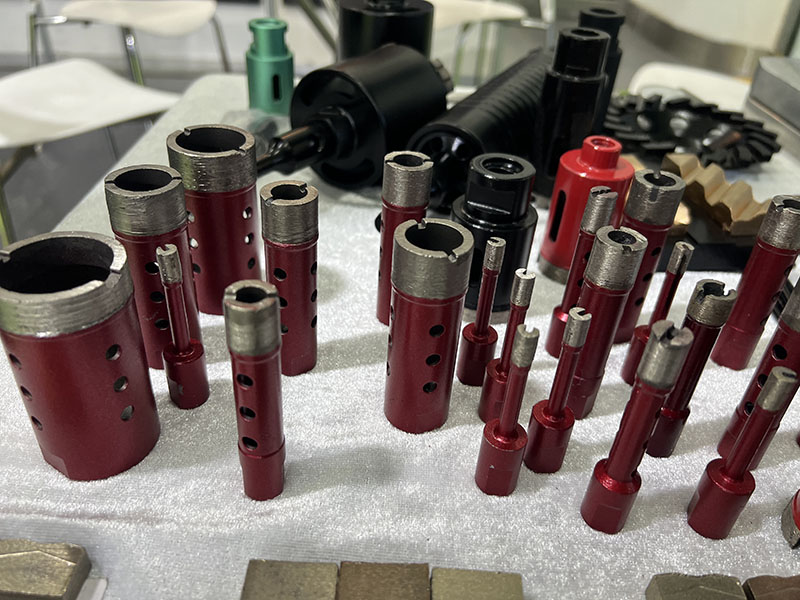
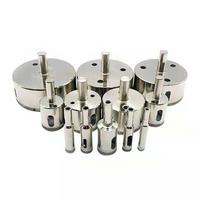
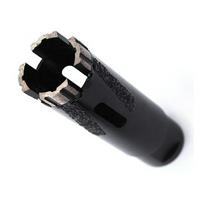
That balance is why dry bits are built differently. A sintered M14 core bit uses a segmented or turbo crown that leaves gaps for dust to escape, while a vacuum brazed bit holds a single layer of diamond on a shaped steel body and relies on open flutes rather than a wearing matrix.
Granite: hard, abrasive, hates glazing
Granite is largely quartz and feldspar, and that makes it both hard and abrasive. A dry bit on granite needs enough pressure to keep the diamonds biting rather than rubbing. If the crown spins without cutting, the bond polishes smooth and the bit glazes - from then on it just gets hot and does nothing. Segmented crowns tolerate this better because each segment works like a small cutting tooth and the slots clear the dust.
Marble: softer, but easy to burn and bruise
Marble is calcite, much softer than granite, so the bit cuts quickly. The risk shifts from glazing to heat damage. Press too hard on dry marble and the friction scorches the surface around the hole, and pressure near break-through can spall the exit edge. Marble also releases fine dust that packs into the flutes if you feed too fast, so lighter, more controlled pressure works better than forcing the bit.
What to look for in a dry core bit
- Open dust paths: slots, flutes or a turbo rim that keep the kerf clear without water.
- A protection tooth or pilot: many dry bits carry a small centre tooth or stepped rim that steers the bit on entry and takes the shock at break-through.
- The right thread: M14 is common on angle grinders, 5/8-11 on US-style polishers and drills - match it to the spindle, not the bit you already own.
- A stated maximum RPM: dry bits run slower than wet ones, and the rating on the bit is a ceiling, not a target.
A vacuum brazed core bit with a turbo segment and protection tooth combines all four, which is why it suits granite and marble work where water is not practical.
Technique that keeps a dry bit alive
- Start at low RPM to cut a shallow groove before leaning into the cut - a bit that skates on entry chips the surface.
- Peck drill. Lift the bit every few millimetres to let the flutes throw dust out; continuous feeding traps dust and heat.
- Hold steady, even pressure. Too little and the bond glazes, too much and the diamond strips out.
- Back the workpiece. Support the exit side so the crown does not blow out the last few millimetres.
- Let the bit cool between holes. A dry bit that is too hot to touch is already losing diamond.
When dry stops being the right choice
Dry drilling suits small diameters, shallow holes and jobsites where water is impossible. Above roughly 50 mm, on deep holes, or in dense porcelain, switch to a wet bit with a water feed - a wet bit removes heat and slurry, cuts faster and lasts longer, and the mess is cheaper than a burnt-out crown.
Safety
Stone dust is a real health hazard, and dry drilling produces the most of it. Wear a dust mask or respirator, eye protection and hearing protection, and clamp the workpiece so it cannot spin. Stay within the bit's RPM rating and follow the manufacturer's instructions for the material you are drilling. For related drilling methods, see our guide to water cooling for diamond core drilling.
Quick selection checklist
- Granite and hard stone: segmented or turbo dry bit, firm pressure, watch for glazing.
- Marble and softer stone: lighter pressure, slower feed near break-through.
- Match the thread (M14 / 5/8-11) and the RPM rating to your tool.
- Buy from the diamond drill bit range so the bit, backing and coolant advice all fit together.