ES
A chipped granite edge is the kind of damage that turns a finished worktop back into a job. The fix is a 100 mm diamond cup wheel on an angle grinder, worked carefully enough to blend the repair into the original edge without leaving a dip or a burn mark. The wheel does the cutting; the technique decides whether the repair is invisible or obvious.
Why 100 mm suits edge work
A 100 mm (4 inch) cup wheel is small enough to control on a narrow edge and light enough to feather a repair without digging in. Larger wheels remove material faster but are harder to steer along a 20 mm stone edge, and their weight makes it easy to gouge. For chip repair, chamfering and blending, the 100 mm format is the practical choice and fits the standard M14 or 5/8-11 grinder spindle.
Cup wheel types for granite edges
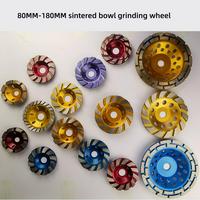
- Double row: two rings of segments, a good balance of speed and finish for edge shaping and repair.
- Turbo / continuous rim: smoother still, best for the final blend where chipping must be avoided.
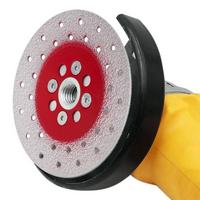
- Resin filled: a continuous face that glides rather than bites - ideal for the last pass on a visible edge.
- Coarse grit: removes the bulk of a chip quickly; finer grit refines the shape afterwards.
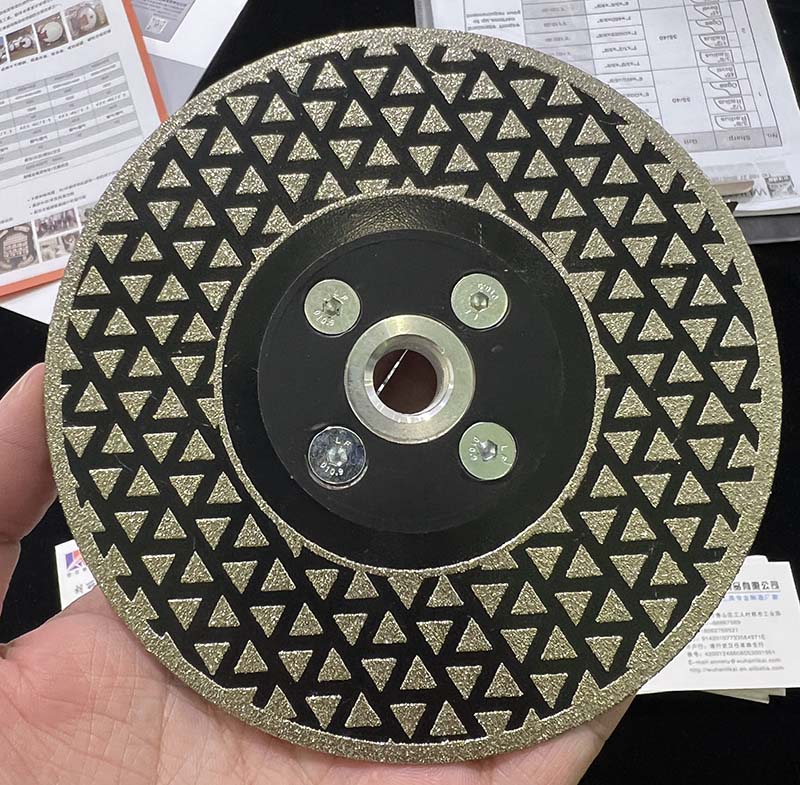
A 100 mm diamond cup wheel covers the shaping stage, while a resin filled cup wheel is the tool for the careful finishing pass.
Repairing an edge without making it worse
- Clean the chip and look at how far the damage runs. A shallow chip can be ground back; a deep one may need filling before grinding.
- Start the grinder off the stone and bring it onto the edge, so the wheel is at speed before contact.
- Work in light passes, taking a little at a time, rather than trying to remove the chip in one go.
- Keep the wheel moving along the edge and never dwell - a stationary wheel burns the stone and leaves a scorch mark.
- Match the angle of the original edge as you blend, checking the profile as you go.
- Blend beyond the visible damage so the repair does not leave a step.
Finishing the edge
Once the shape is right, step down through finer grits to match the surface around it. Grinding alone leaves a matte scratch pattern, so a visible edge usually needs polishing pads to bring it back to the surrounding finish - see our notes on hand polishing pads for edge work. Working from coarse shaping to a fine blend is what makes the repair disappear.
Avoiding the classic mistakes
- Too much pressure: burns the stone and overloads the wheel. Let the diamond cut.
- Dwelling in one spot: creates a hollow that is harder to fix than the original chip.
- Wrong grit: a coarse wheel used for the final pass leaves scratches you then have to remove.
- Running dry on a wheel that wants water: heat builds and the edge discolours.
- A worn or unbalanced wheel: vibration ruins the edge and risks the wheel failing.
Safety
Granite dust contains silica and the grinder throws it hard, so wear a dust mask or respirator, eye protection and hearing protection, and use dust extraction or water suppression. Keep both hands on the tool, use the guard and side handle, respect the wheel's RPM rating and inspect it for cracks or missing segments before use. Clamp the worktop so it cannot shift, and never grind towards your body - a cup wheel that grabs will take the grinder with it.
Edge repair in short
- 100 mm cup wheel, light passes, keep moving.
- Coarse to remove, resin filled or fine to blend.
- Polish afterwards to match the surrounding finish.
- Dust control and PPE throughout; browse the grinding disc range for compatible wheels.