ES
Quartz countertops are engineered stone: mostly ground quartz held together with resin and pigment. That makes them uniform and non-porous, and it also makes them dense, abrasive and sensitive to heat - a combination that punishes the wrong cutting disc.
Why quartz is demanding
Three properties shape how quartz cuts. Its high quartz content makes it abrasive, so it wears diamond quickly and rewards a bond that keeps exposing fresh grit. Its resin binder is heat-sensitive: too much heat softens the resin and smears the cut instead of cutting cleanly. And because quartz is fully dense with no natural flaws, the blade has no weak grain to follow - every millimetre is cut by the diamond.
Disc types for quartz
- Continuous rim: the cleanest edge on a visible cut. More diamond in contact means less breakout, at the cost of speed.
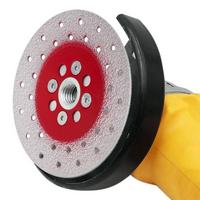
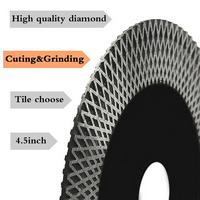
- Turbo and mesh turbo: faster cutting, and a mesh turbo clears the fine slurry quartz produces so the blade runs cooler. A hot-pressed sintered turbo mesh blade is built for exactly this kind of dense, heat-sensitive material.
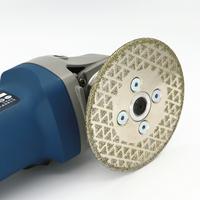
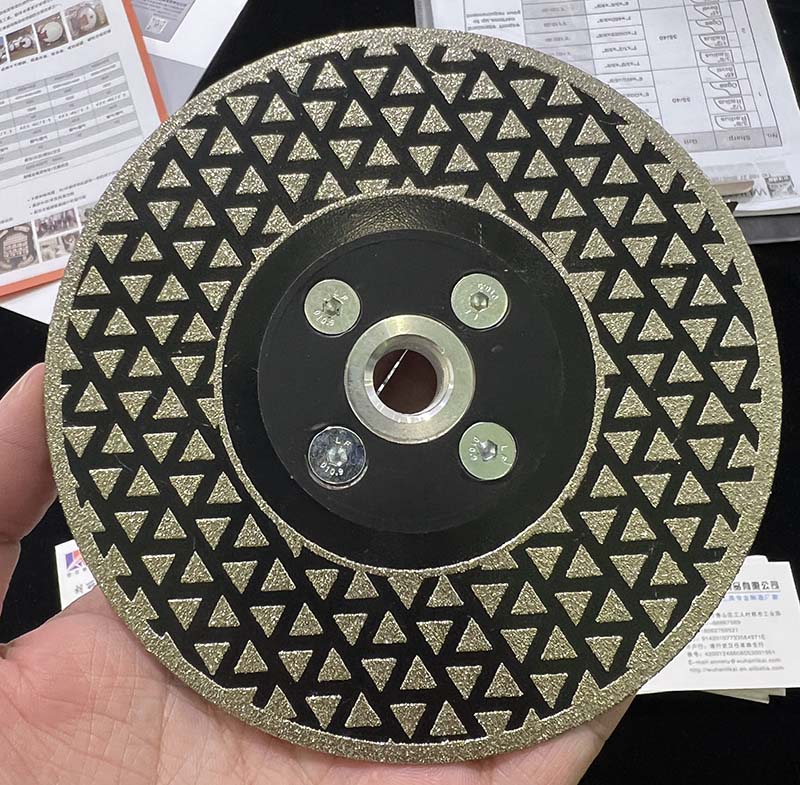
- Electroplated thin disc: a thin, single-layer diamond coating gives a narrow kerf and a quick, precise cut, but there is less diamond to wear through.
- Segmented: for rough sizing only - an aggressive segmented rim leaves a rougher edge than a quartz countertop normally allows.
Wet or dry on quartz
Wet cutting protects both the edge and the blade. Water cools the resin binder and flushes the fine slurry that would otherwise pack the kerf and raise friction. For a visible edge, wet cutting is the safer choice. Dry cutting works for rough sizing and trim cuts when dust extraction is available, but it demands a dry-rated blade, short passes and a watchful eye on heat. Heat is the main enemy of a quartz cut, which is why heat buildup in diamond cutting is worth reading before a large job.
The fabrication sequence
Most quartz jobs move through three stages: cut oversize, profile the edge, then polish. The cutting disc only has to deliver a clean, straight line with a small allowance; the finish comes later. Cutting straight and slightly oversize with a faster disc is often better than forcing a perfect edge in a single pass.
Buying checklist
- Rim type: continuous for a finished edge, turbo or mesh turbo for speed on rough cuts.
- Bond and grit: matched to dense engineered stone, not to softer natural marble.
- Wet or dry rating: confirm the disc suits the method you will actually use.
- Maximum RPM: must meet or exceed the tool's speed.
- Thickness: thinner discs cut faster and waste less material, but need a steady hand.
A diamond blade for porcelain tile and ceramic also handles many quartz trim cuts, since both are dense and hard.
Safety
Quartz dust contains crystalline silica, so dust control is not optional. Use water feed or extraction, wear a respirator and eye protection, fit the guard, and clamp the workpiece. Check the disc for cracks before use, keep within the rated RPM, and follow the manufacturer's instructions for the tool and the disc.
Compare the options in the cutting disc range, and read how to choose a diamond blade for the wider selection logic. Match the rim to the finish you need, match the bond to engineered stone, and control the heat - that is what separates a clean quartz cut from a burnt one.