
 ES
The same core bit that drills cleanly through brick will glaze on porcelain, and one that flies through marble will struggle in reinforced concrete. Each material puts different demands on the diamond and the bond - some are hard, some abrasive, some brittle - so choosing a core bit means reading the material first. Understanding the four common groups makes selection much simpler.
Brick and block: soft and abrasive
Brick and block are soft but abrasive, so they wear a bond quickly. That calls for a harder bond that holds the diamond long enough to cut, and enough flute clearance to clear the relatively large volume of dust. Brick work is usually fast and forgiving, but a very soft-bond bit will be eaten away. Water or extraction keeps the dust down, and the bit itself needs to cope with the occasional void or mortar line.
Tile and porcelain: hard and brittle
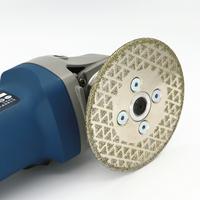
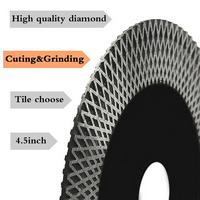
Tile is where core bits earn their keep and where the wrong bit becomes obvious. Glazed ceramic is moderately hard; porcelain is denser and harder still. Both chip easily, so the bit needs a sharp, fine crown, steady water and light, controlled feed. A core bit for ceramic tile and stone is built with a fine enough crown to protect the glaze while still cutting hard tile.
Marble: soft but heat-sensitive
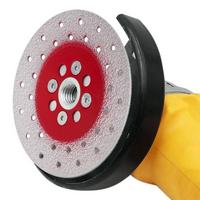
Marble cuts quickly, so the risk is not hardness but heat and chipping. A bit that spins fast or runs dry scorches the stone, and pressure at the exit spalls the edge. A segmented or turbo crown that clears dust well suits marble, and water cooling protects the surface. A sintered M14 core bit is a good match for marble and similar stone where a durable crown is useful.
Concrete: hard, variable and abrasive
Concrete is the hardest general case - dense, abrasive and often reinforced. Core bits for concrete need a strong, durable crown that keeps cutting through aggregate, and the drilling is best done with a core drill and stand rather than freehand, because the load is heavy. A range of core bits from 5 mm to 150 mm covers the diameters concrete work usually needs, from fixing holes to large services.
Choosing one bit for mixed work
- If you drill one material, match the bit to it - that always gives the best life and finish.
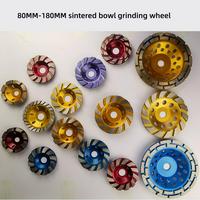
- If you drill several, a versatile sintered or brazed bit with a moderately fine crown covers the widest range without glazing.
- Always match the thread to the tool (M14 for most European grinders, 5/8-11 for many US machines, or a chuck shank).
- Match the diameter to the fixing, and remember that larger diameters need lower RPM.
- Keep water flowing on wet bits and peck-drill on dry ones to clear dust.
For thread matching, see M14 vs 5/8-11 compatibility, and for dry technique see dry drilling speed and pressure.
Safety
All core drilling produces dust, so wear a dust mask or respirator and eye protection, and use water or extraction. Keep water away from electrical connections with an RCD or GFCI, clamp or support the workpiece, use the tool's side handle and respect the bit's RPM rating. Follow the manufacturer's instructions for the material, and for concrete check for services and reinforcement before drilling.
Core bits in short
- Brick: hard bond for abrasive material.
- Tile and porcelain: fine sharp crown and careful feed.
- Marble: turbo or segmented crown, water cooling.
- Concrete: durable crown and a core drill for control.
- Browse the diamond drill bit range for the full spread.