
 English
Slate and basalt sit at the other end of the scale from limestone. They are dense, fine-grained, and slow to release swarf. The blade does not pluck grains out of the edge; it grinds through a compact mass and concentrates heat at the segment face.
Why heat dominates
Fine-grained stone produces a thin, paste-like slurry that does not carry heat away as effectively as coarse chips. With little abrasive aggregate to wear the bond back, a hard bond glazes and the diamond begins to rub. Once that happens, temperature rises at the steel core as well as at the segments, and a blade can lose tension before it looks obviously worn.
Slate adds a structural complication: its cleavage planes can split ahead of the blade if the piece is unsupported or if the feed is heavy. A cut that looks clean on top may have delaminated underneath.
Water temperature and flow
Check the water as well as the blade. Warm water returning from a long run carries less heat away on the next pass, and a tank-fed system sitting in the sun can start warm before the first cut. Use a supply large enough to stay cool, or plan a change of water during a long session. A flow indicator at the nozzle makes a partial blockage visible before the segment does.
Practical controls
- Continuous wet cutting. Direct flow to both faces of the blade, close to where the segments enter the stone.
- Shallow step-down passes. Shorten the contact arc and let the kerf flush between passes.
- Softer bond. A bond that exposes fresh diamond without relying on abrasive swarf suits dense stone better.
- Moderate feed. Let the blade maintain spindle speed; a falling note means heat is building.
- Full support. Clamp the piece on both sides of the line, especially for thin slate.
The heat buildup guide explains the failure sequence in more detail, and the slurry management guide covers collecting the fine paste that these stones produce.
Reading the slurry
Thin, dark, and warm to the touch is a warning. Withdraw, increase flow, and check that the nozzles still point at both blade faces after the last blade change. A blade that needs increasing pressure to hold the same cut rate has probably glazed; dressing it on a suitable abrasive block is more effective than continuing to force the cut.
Working with thin slate
Thin slate splits along cleavage planes rather than across them, so the risk is not a chipped edge but a layer separating behind the cut line. Bed the sheet on a flat, continuous support and clamp a strip along both sides of the line.
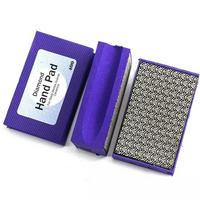
Where the design allows, cut slightly oversize and refine the final edge with a hand pad or a small profiling wheel. That removes the shallow delaminated zone without asking the saw to produce a finished surface in one pass.
Choosing tooling
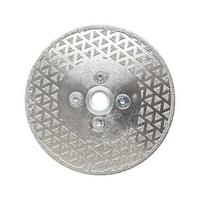
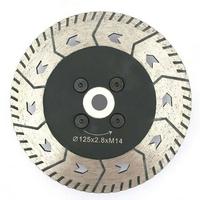
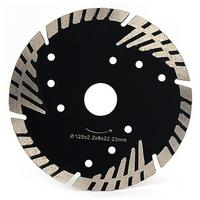
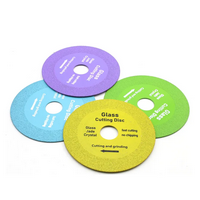
Look for blades specified for hard, dense stone with a bond that wears in low-abrasion conditions. In the cutting disc category, a hot-pressed sintered turbo blade has a segment profile that helps clear slurry, while a double-sided cutting and grinding disc can be useful where the same piece needs a light edge cleanup afterwards.
Keep the guard fitted, wear eye protection and hearing protection, and use an RCD-protected supply for wet work. Confirm the blade's maximum rated rpm before starting, and isolate the tool before changing blades or adjusting nozzles.