English
Autoclaved aerated concrete and calcium silicate products look like masonry but cut more like a dense foam. There is little hard aggregate, a lot of entrained air, and a fine, pervasive dust that behaves differently from concrete fines. Treating them as ordinary concrete wastes blades and fills the work area with dust.
Why the bond wears differently
In dense concrete, hard aggregate helps fracture the surface and abrades the metal bond just enough to keep fresh diamond exposed. In aerated block, the material is soft but surprisingly abrasive in a fine, uniform way. A bond that is too hard can glaze because nothing gritty is wearing it back; a bond that is too soft disappears quickly against the constant fine abrasion.
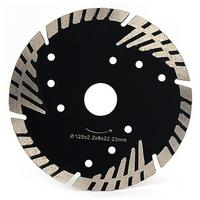
The lack of coarse aggregate also means the cut produces powder rather than chips. That powder packs into the kerf and around the segments, so segment geometry with room to clear is more useful than a dense continuous rim.
Dust is the main site problem
- Volume. Cutting a lightweight block generates a great deal of fine dust per metre of cut.
- Behaviour. The fines stay airborne longer and travel further than concrete chips.
- Capture. A close-fitting shroud and an extractor with a suitable filter are needed even for short cuts.
- Cleanup. Dry sweeping or compressed air just redistributes it; vacuum or wet methods are the practical options.
- Respiratory protection. A respirator rated for the exposure remains necessary with extraction running.
The dust control guide covers extraction setup for concrete grinding; the same capture principles apply here with more attention to filter loading.
Handling the material
Lightweight blocks break at the edge if they are unsupported or if the blade exits into a void. Use a stable bench, support both sides of the cut line, and let the blade's own speed do the work rather than forcing the feed. A shallow score pass helps keep a long cut straight in a material that offers little resistance to wandering. The fibre cement cutting guide covers a different lightweight board with similar handling concerns.
Blade life on lightweight block
Because there is no coarse aggregate to indicate wear, blade condition is easy to misread on these materials. Track the number of linear metres cut rather than how the segments look, and compare the cut rate at the start and end of a batch.
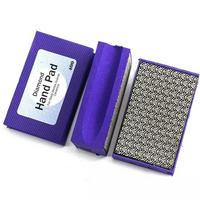
A blade that has slowed noticeably is usually glazed rather than worn out. Dressing it on a suitable abrasive block often restores the rate. Keeping one blade dedicated to lightweight masonry also avoids the confusion of switching between abrasive block and dense concrete, which call for opposite bond behaviour.
Tooling and safety
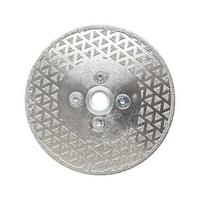
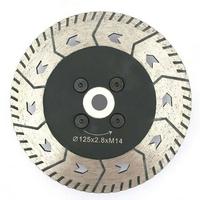
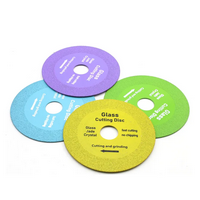
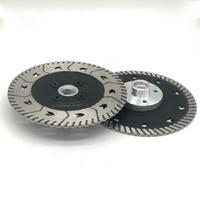
Browse the diamond saw blade category for blades suited to abrasive, low-density masonry. A segmented general-purpose blade clears powder better than a continuous rim, and a larger circular cutting disc is an option where deeper cuts are needed on a fixed saw.
Wear eye protection, hearing protection, and a respirator rated for the exposure, keep the guard fitted, and isolate the tool before changing a blade. Confirm the blade's rated rpm and keep dust extraction running for every pass.