ES
Fiber cement is one of the few building panels where the dust is a bigger issue than the cut. The material is abrasive, the dust is fine, and it can contain crystalline silica. Getting the cut right is straightforward; getting the dust right is the part that decides whether the job is safe.
What the material is
Fiber cement boards combine cement, cellulose fibre, and fillers, sometimes with silica sand. The cement matrix makes them abrasive; the fibre gives them toughness. Composite panels add other layers, and some have a coating or a decorative face that chips easily.
The abrasiveness wears a diamond bond quickly, which is why a hard bond with open gullets is the usual choice rather than a blade tuned for tile.
Blade choice
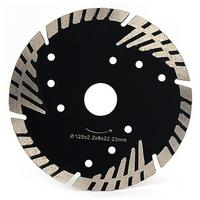
A thin kerf blade with a hard bond cuts fiber cement cleanly and clears the dust. Segmented rims clear better than continuous rims on thicker boards, but leave a rougher edge; a continuous rim gives a cleaner line on a visible cut.
Fiber cement also dulls carbide quickly. Diamond is the practical choice for anything beyond occasional cuts.
Scoring versus sawing
Thin fiber cement sheets can be scored and snapped, which produces almost no dust. The technique works best on straight cuts in thin material, and it leaves a slightly rougher edge that is usually hidden by a joint or a trim.
For thicker boards, cut-outs, or visible edges, sawing is the only option. Choose the method per cut rather than per job.
Dust control that works
A shroud and an extractor rated for fine dust are the baseline for powered cutting. A standard shop vacuum is not enough for the volume of fine dust fiber cement produces; the filter clogs and the airflow drops within minutes.
Cut outdoors or in a ventilated area where possible, and wear a respirator appropriate to silica exposure. Dry sweeping afterwards just puts the dust back in the air — use wet cleanup or a vacuum with a suitable filter.
Edge and fixing details
Cut edges on fiber cement are porous and usually need sealing or painting. A raw edge absorbs water and can fail in freeze-thaw conditions.
Leave the specified clearance at fixings and joints. Fiber cement moves with moisture, and a tight joint can crack the board or pop a fixing.
Common mistakes
- Cutting dry indoors with no extraction.
- Using a tile blade with a soft bond and wearing it out in a day.
- Cutting a coated panel from the face side and chipping the coating.
- Leaving cut edges unsealed.
- Assuming a shop vacuum is adequate for the dust volume.
Tooling
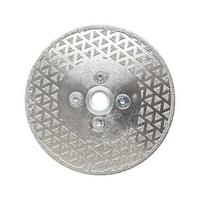
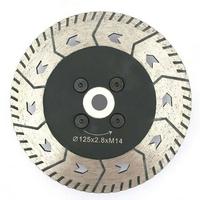
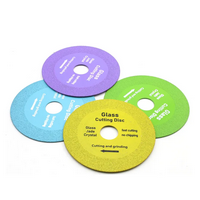
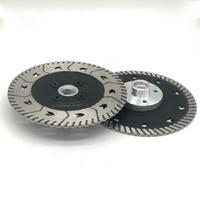
For the cut, the diamond saw blade category covers the blade types. A porcelain and panel blade handles thinner boards, and a thin panel blade gives a cleaner line on coated faces.
Two related reads: dust control when cutting and grinding, and reducing chipping when cutting.
Safety
Respiratory protection is the primary control, followed by extraction and ventilation. Wear eye protection against fine dust and flying fragments, hearing protection, and gloves. Keep the guard fitted, match the blade's rpm rating to the saw, and do not cut above shoulder height with a hand-held saw.
If you are cutting fiber cement or composite panels and need a blade specification for the thickness and coating, send the details and we will confirm.