ES
Ceramic fibre board and similar insulation composites are not brittle in the way tile is brittle. They are a mat of fibres with a binder, and a cutting tool tends to pull, tear, and separate layers rather than shear a clean edge. The result is a ragged line and a cloud of fibres that behaves nothing like stone dust.
What fails first
The top layer usually lifts before the blade has passed through, especially on thin board. A coarse segmented blade grabs fibres and tears them out; a rigid workpiece with no backing lets the lower layers flex away from the cut. On laminated composites, the bond between layers can separate several millimetres back from the edge even where the visible cut looks acceptable.
Heat is a secondary issue. Some binders soften and smear at the segment face, loading the blade in the same way resin-rich stone does. Wet cutting is often ruled out because the board absorbs water and loses its insulating properties, so the approach has to be mechanical rather than thermal.
Practical setup
- Sandwich the board. Clamp between two sacrificial sheets so both faces are supported right up to the cut line.
- Use a fine, thin rim. Fewer impacts and a narrow kerf reduce fibre pull-out.
- Score before the full pass. A shallow first cut severs the surface layer cleanly.
- Feed slowly and steadily. Any snatch shows up as a torn patch on the underside.
- Contain at source. Capture fibres with a local extractor rather than letting them settle across the workshop.
The refractory brick cutting guide covers dense fired products used in the same installations; those behave like masonry, not like fibre board, and need a different blade entirely.
Health and housekeeping
Released fibres are the reason this job needs planning. Use local extraction with a suitable filter, wear a respirator rated for the exposure, and avoid compressed air for cleanup. Bag offcuts promptly and keep the work area separate from any polishing or food-handling space. The dust control guide describes the extraction principles even though the contaminant here is fibrous rather than granular.
Tool condition and cut quality
Fibrous board hides a dull blade well: the cut still goes through, but the edge gets fuzzier from one piece to the next. Compare the first and last offcuts of a batch side by side under the same light.
If the later pieces show more pulled fibre, swap or dress the disc rather than slowing the feed further. Slowing a dull blade increases the time it spends tearing each fibre. Keep a separate disc for insulation products so that a blade dulled on masonry is not used on a visible edge.
Tooling and safety
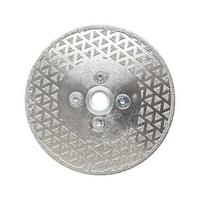
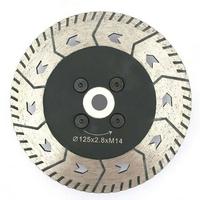
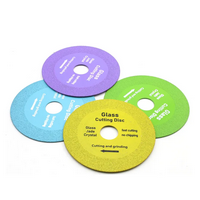
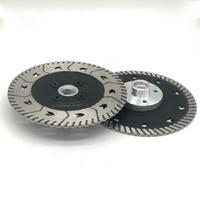
Browse the cutting disc category for thin-rim options. A thin glass and ceramic cutting disc gives the narrowest kerf, and a double-sided cutting and grinding disc can dress a cut edge afterwards where the finish matters.
Clamp the workpiece, wear eye protection, gloves, and a respirator rated for the exposure, and keep the guard fitted. Confirm the blade's rated rpm and isolate the tool before changing discs.