
 ES
Refractory brick is soft enough to cut quickly and dusty enough to be a health problem. That combination encourages operators to rush, and rushing is how kiln linings end up with joints that do not close.
What refractory material is
Fire brick and refractory shapes are designed to withstand high temperature. They are typically based on fireclay, silica, alumina, or magnesia, with a porous structure that insulates. Some contain crystalline silica; some contain other fibrous or respirable components.
The porosity makes them easy to cut. It also means they crumble at the edges if the blade is blunt or the feed is too heavy.
Blade choice
Refractory is abrasive and soft, so a hard bond resists wear. A segmented or turbo rim clears the dust and reduces loading; a continuous rim gives a cleaner edge but loads faster on soft material.
Do not use a blade that has been used on metal or on cured concrete without cleaning it. Embedded particles from a previous job can tear the soft refractory edge.
Light pressure, steady feed
Heavy pressure on soft refractory crushes the edge instead of cutting it. The result is a rounded, crumbly face that will not sit tight against its neighbour, and in a kiln lining the joint thickness affects how the lining performs.
Multiple light passes produce a square edge. If the blade starts to wander, reduce pressure rather than increasing it.
Joint tolerance
Kiln and furnace linings are built with tight joints, sometimes with a thin mortar or a ceramic fibre gasket. A cut that is 2 mm out of square can be enough to prevent the joint closing properly.
Check the square after the first cut and adjust the guide before cutting the rest of the batch. Consistency matters more than speed when fifty bricks are going into the same ring.
Dust
Refractory dust is fine and easily airborne. After a service life at high temperature, some refractory materials can contain crystalline silica in a form that is particularly respirable.
Wet cutting is the most effective control where the material tolerates it. Where water is not practical, use extraction at the cut and a respirator rated for the exposure. Do not dry sweep the area afterwards.
Common mistakes
- Cutting with too much pressure and crushing the edge.
- Using a blade contaminated from another material.
- Cutting dry in an enclosed space with no extraction.
- Not checking square until the batch is finished.
- Assuming the dust is harmless because the material is soft.
Tooling
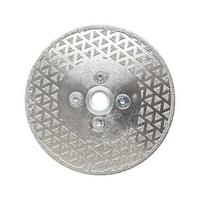
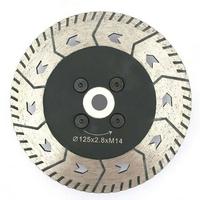
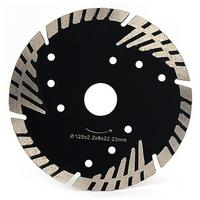
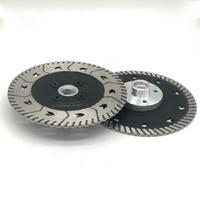
For the cut, the diamond saw blade category covers the blade types. A general purpose diamond blade handles most refractory work, and a turbo rim circular blade gives a cleaner edge on visible faces.
Two related reads: heat buildup in diamond cutting, and dust control when cutting and grinding.
Safety
Respiratory protection and extraction are the primary controls. Wear eye protection, hearing protection, and gloves, keep the guard fitted, and match the blade's rpm rating to the saw. If the material is a known silica-bearing refractory, treat the dust as a silica exposure and plan the control accordingly.
If you are cutting refractory shapes for a specific lining design, send the material type and joint tolerance and we will confirm the blade and cutting approach.