ES
115 mm and 125 mm blades - about 4.5 inch and 5 inch - cover most handheld diamond cutting. They are small enough to control and large enough to cut tile, stone and concrete, which is why they are the default sizes on so many angle grinders. The difference between the two matters more than the small step in diameter first suggests.
Sizes, bores and what fits
Both sizes usually share the same 22.23 mm bore, so the same grinder arbor fits either. What changes is the disc's rated speed and how much blade is in contact with the material.
- 115 mm: the most common all-round size, easy to control and ideal for tile, general stone cutting and detail work.
- 125 mm: more reach and a longer edge in the cut, suited to thicker material and larger tiles, but it needs a grinder rated for the larger disc.
Why size changes the RPM limit
The speed that matters is not the spindle RPM but the rim speed at the outer edge, which rises with diameter. A 125 mm disc turns its edge faster than a 115 mm disc at the same RPM, so a larger disc carries a lower maximum RPM. Typical ratings sit around 13,000 rpm for a 115 mm disc and around 12,000 rpm for a 125 mm disc, but the rating that counts is the one printed on your disc. Matching RPM ratings to the tool is the check that keeps a disc inside its safe limit.
Which size for which job
- Tile and detail work: 115 mm, for control and a lighter feel.
- Thicker stone and larger tiles: 125 mm, for reach and a longer cut per pass.
- Concrete and block: either size, matched to the grinder's rating and the depth needed.
Blade types in these sizes
- Continuous rim: the cleanest edge on tile and stone.
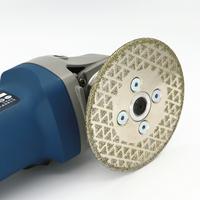
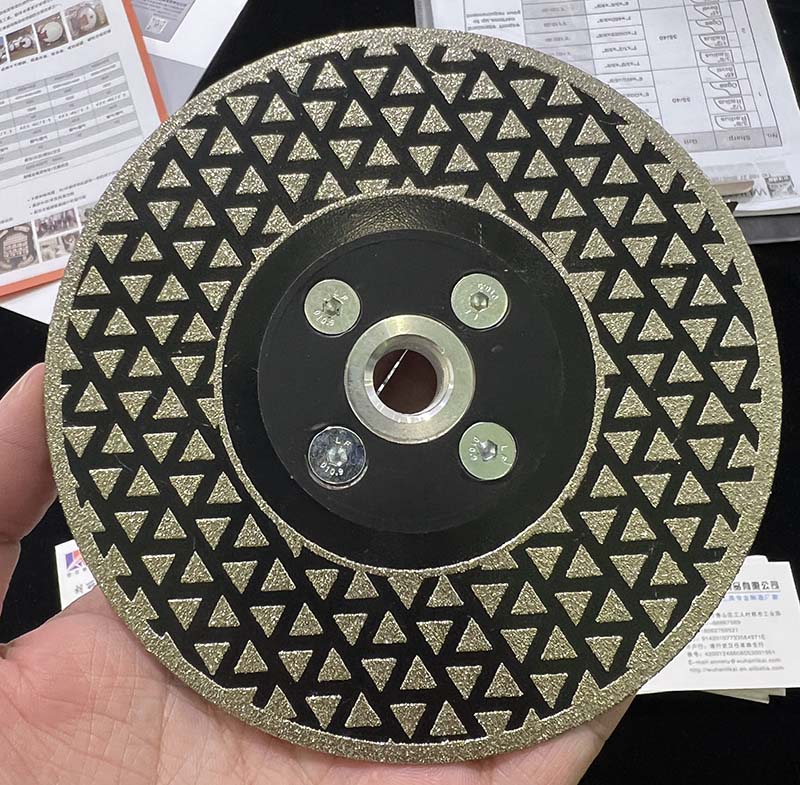
- Turbo and mesh turbo: faster cutting; a 115-125 mm hot-pressed turbo mesh blade clears slurry well and runs cool on dense material.
- Segmented: rough cutting where edge quality is not critical.
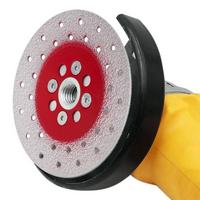
- Double-sided: cutting and light grinding in one disc.
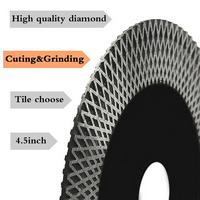
A diamond blade for porcelain tile and ceramic is typical of the continuous-rim build these sizes offer for tile work.
Setup checklist
- Match disc diameter to the grinder's rated capacity.
- Check the disc's maximum RPM against the grinder's no-load speed.
- Fit the guard and the correct flange, and seat the disc flat.
- Support and clamp the workpiece so it cannot shift.
Safety
Fit the guard, wear eye protection and, when cutting dry, a dust mask and hearing protection. Clamp the workpiece, inspect the disc for cracks before each use, and never exceed the rated RPM. Let the disc reach full speed before it touches the material, and follow the manufacturer's instructions for the tool and the disc.
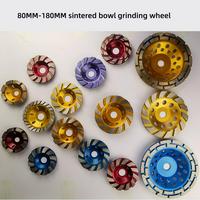
Compare blades in the diamond saw blade range, read how to choose a diamond blade, and know the signs in when to replace a diamond saw blade, core bit or cup wheel. Pick the size for the job and the RPM rating for the tool - those two decisions keep a small grinder blade safe and productive.