
 ES
The maximum RPM figure on a diamond blade, cup wheel or core bit is not a suggestion. It is the speed above which the steel body can deform or fail, and it exists to keep the operator and everyone nearby safe. An RPM mismatch is one of the most serious mistakes you can make with diamond tooling, and it is entirely preventable - it comes down to comparing two numbers before fitting the tool.
The two numbers that matter
- The tool's speed: an angle grinder, polisher or drill has a no-load speed, usually printed on its rating plate. Some tools are variable-speed and run lower than their maximum.
- The accessory's maximum RPM: the highest speed the blade, wheel or bit is rated to withstand, marked on the accessory itself.
The rule is simple: the accessory's maximum RPM must be equal to or higher than the tool's speed. If the accessory is rated below the tool, it must not be fitted - no exceptions, however briefly. For how to find these figures on a blade, see reading diamond blade labels.
Why size changes the limit
The rim of a wheel, blade or bit travels at a speed set by the diameter and the RPM together. A larger tool turns at the same RPM but its edge moves much faster, so a big blade needs a lower maximum RPM than a small one. That is why a large blade cannot go on a high-speed grinder built for small discs: at the grinder's speed the big blade's edge would be overspeeding. Diameter and RPM are linked, and both must be considered together.
Typical patterns
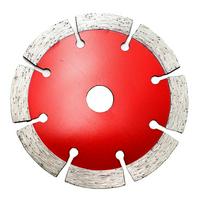
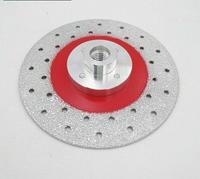
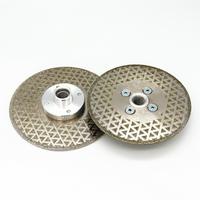
- Small blades and discs: rated for high RPM, suited to standard angle grinders.
- Large blades: rated for lower RPM, suited to slower, more powerful machines or rail saws.
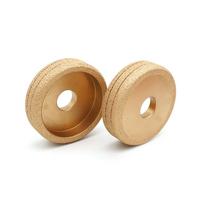
- Cup wheels: rated to match the grinders and polishers they are used on - check each one.
- Core bits: larger core bits run at lower RPM, which is why core drills are usually slower and often variable-speed.
Because the figures vary so much between products, there is no safe assumption - every accessory must be checked against the specific machine it will be used on.
What goes wrong with an RPM mismatch
- Blade or wheel failure: overspeeding stresses the steel core beyond its limit, and it can crack or shed segments, throwing material at speed.
- Loss of control: an overspeeding tool behaves unpredictably, making a kickback more likely.
- Overheating: running a tool above its design speed generates heat and shortens life even if it does not fail outright.
- Voided safety: using a tool outside its rating takes it outside its tested envelope - the guard and other protections assume correct use.
Checking before you fit
- Read the tool's no-load speed from its rating plate.
- Read the accessory's maximum RPM marking.
- Confirm the accessory rating is at least as high as the tool speed.
- On a variable-speed tool, remember the maximum is the fastest it can go - the accessory must cover that.
- Check the marking is legible; if it has worn off, do not use the accessory.
- Also check the bore, thread and mounting are correct, since these affect stability at speed.
Related: coolant and speed together
Speed does not act alone. A tool run at its rated speed but without the coolant it needs still overheats. Correct use means matching the RPM rating and the cooling method to the tool and the material - for the dry side, see dry drilling speed and pressure.
Safety
Never fit an accessory with a maximum RPM below the tool's speed. Keep guards fitted, use the tool's side handle, wear eye and hearing protection plus a dust mask or respirator, and inspect blades and wheels for damage before use. Follow the manufacturer's instructions for the tool and the accessory, and if the markings are missing or unreadable, treat the accessory as unusable.
RPM matching in short
- Accessory maximum RPM must be at least the tool's speed.
- Larger accessories need lower RPM - size and speed are linked.
- Check every accessory against every machine; never assume.
- An illegible rating means the accessory cannot be used safely - browse the tool ranges for rated products.