
 ES
Quartz and engineered stone have become the default surface for kitchens, and they have changed what fabricators ask of their tools. The material is mostly ground quartz held together by resin, so it behaves like stone in some ways and like plastic in others. That mix makes it abrasive, heat-sensitive and prone to burning - which is why the tooling matters more on quartz than on almost any other surface.
Why quartz is hard on tools
- Abrasive: the quartz content wears diamond tooling faster than natural stone with the same hardness.
- Heat-sensitive: the resin binder softens and discolours when it gets hot, so the tool has to cut cool.
- Blunt-resistant: because it is dense, a dull tool rubs and burns rather than cutting, which makes sharpness critical.
- Consistent: unlike natural stone, quartz is uniform, so a tool that works once works predictably.
The tool set a fabricator needs
- Cutting: a hard-bond diamond blade made for engineered stone. A blade for softer stone glazes or burns the edge.
- Edge profiling: router bits and profile wheels, run wet and in stages so the edge does not burn.
- Sink cutouts and holes: finger bits and core bits, with steady water - a dry bit ruins an expensive slab.
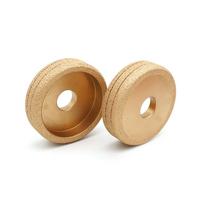
- Grinding and levelling: cup wheels, matched to the material and run cool.
- Polishing: a full grit sequence of resin pads, wet, up to the required gloss.
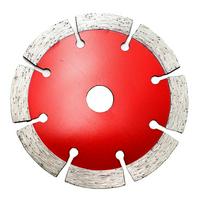
For the cutting stage a hot-pressed sintered turbo blade is the sort of hard-bond tool quartz demands, and for finishing a wet diamond polishing pad run through the grits brings up the gloss.
Cutting and shaping quartz
- Cut wet wherever possible; water cools the blade and the material and flushes the abrasive slurry.
- Feed steadily and let the blade cut - forcing it heats the resin and burns the edge.
- Support the slab fully; quartz is rigid but a cutout point is still vulnerable to flex.
- For edges, take the profile in stages and keep water flowing to avoid burn marks.
- Clean slurry off the surface promptly; dried quartz slurry is hard to remove and can mark the finish.
Polishing quartz
Quartz polishes to a high gloss, but it burns easily if the sequence is rushed or the pads are dry. Step through the grits in order, keep the pads wet and clean, and do not skip steps - a skipped grit shows as a scratch that cannot be removed later. Use a backer matched to the shape, and replace pads before they glaze. For the problem-solving side, see polishing pad troubleshooting.
Matching tools to quartz
- Hard bond for cutting and grinding, so the tool does not shed diamond too early on the abrasive material.
- Sharp and cool for edges - a glazed tool burns the resin.
- Wet throughout, both for cooling and for dust control.
- Keep diamond tools dedicated to quartz where possible; a tool used on concrete then quartz may be contaminated or glazed.
Safety
Quartz fabrication produces fine silica dust and resin particles, so wear a dust mask or respirator, eye protection and hearing protection, and use water or extraction to control dust. Keep water away from electrical connections with an RCD or GFCI, support and clamp the workpiece and respect the tool's speed. Follow the manufacturer's instructions for the material - engineered stone often carries specific fabrication guidance that matters for both finish and warranty.