
 ES
Marble is soft, which makes it seem easy to cut - and that is exactly why so many marble edges come out burnt or chipped. The material cuts quickly, so the temptation is to speed up, and the heat that follows scorches the surface while the same haste chips the edge. Cutting marble cleanly is about restraint: the right blade, plenty of water and a steady, unhurried feed.
Why marble burns
Marble is calcite, and calcite discolours under heat. When a blade rubs instead of cutting - because it is dull, glazed, spinning too fast or being pushed too hard - friction builds and the surface around the cut scorches. The burn mark goes into the stone, not just the surface, so it cannot be polished out. The cure is to cut cool: a sharp blade, water cooling and a feed that lets the diamond work rather than rubbing.
Why marble chips
Marble is also brittle, with fine veins that are weak points. A blade that is too coarse, or that is worked too fast on the exit side, chips the edge. Because marble is often pale, a chipped edge on a light stone is conspicuous and hard to disguise. The remedies are a thin, fine-rim blade, support behind the exit and a slower feed at the end of the cut.
Choosing the blade
- A continuous rim or fine turbo blade: cuts smoothly and cleanly and suits the soft, brittle material.
- A sharp rim: a dull or glazed blade is the main cause of burning. If the blade stops cutting cleanly, dress or replace it.
- A thin kerf: removes less material, so it generates less heat and stresses the edge less.
- A blade sized for the job: a blade much larger than needed is harder to control on a thin slab.
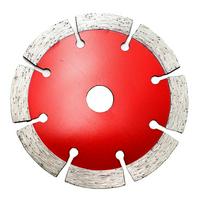
A diamond cutting disc for marble, tile and stone is the kind of fine, cool-cutting blade marble work needs.
Cutting technique that protects the edge
- Use water, always. Wet cutting cools the blade and the stone and flushes the slurry - the single most effective protection against burning.
- Feed steadily and slowly. Let the blade cut at its own pace; pushing harder only generates heat.
- Keep the blade straight. Steering the blade in a cut widens the kerf and stresses the edge.
- Support both sides of the cut, especially the exit, so the stone does not flex and chip as the blade breaks through.
- Do not stop in the cut. Pausing with the blade spinning in one place heats that spot and can leave a burn or a mark.
- Use a guide for long straight cuts so the feed stays consistent and the line stays true.
What to do if you burn or chip marble
A light chip on a visible edge can sometimes be ground and polished back, using a fine marble disc to blend the damage and then pads to restore the finish. A burn mark, however, is in the stone and usually cannot be removed - which is why prevention, not repair, is the aim. For the polishing side, see avoiding swirl marks when polishing stone.
Safety
Wear eye protection and a dust mask or respirator, and use water to control dust and heat. Keep water away from electrical connections with an RCD or GFCI, support and clamp the slab, respect the blade's maximum RPM and keep the guard fitted. Follow the manufacturer's instructions for the blade and the stone, and never force a blade that has started to burn - that is a sign to stop, not to push harder.
Cutting marble in short
- Sharp fine blade, lots of water, slow steady feed.
- Support the exit to stop chipping; never stop mid-cut.
- Burns cannot be polished out - prevent them.
- Browse the diamond saw blade range for marble-suitable blades.