ES
A diamond blade carries a small set of markings, and every one of them exists for a reason - mostly safety. Reading them correctly tells you whether the blade is even allowed on your machine, what it will cut and how it will perform. Ignoring them is how people fit an overspeed blade to a grinder and get hurt.
The essential markings
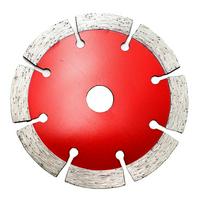
- Diameter: the blade's outside measurement. It sets what depth the blade can cut and what machine it fits.
- Bore (arbor): the centre hole size. It must match the machine spindle or an adaptor; a mismatched bore makes the blade run out of true.
- Maximum RPM: the fastest the blade is allowed to spin. This is the single most important safety marking.
- Segment or rim height: how deep the diamond layer is, which relates to usable life.
- Thickness: the kerf width, which affects cutting speed, waste and heat.
Why maximum RPM matters most
A blade has a maximum RPM because above it the steel core can deform or fail, throwing the blade and its segments. The figure is a ceiling, not a target, and it must be equal to or higher than the machine's no-load speed. A large blade on a high-speed grinder is a classic and dangerous mismatch - the blade's RPM rating has to cover the tool, always. For how to match ratings to blades, cup wheels and core bits, see matching RPM ratings to diamond tools.
Direction and mounting markings
- Rotation arrow: where a blade is directional, the arrow shows which way it must spin. Fitting it backwards makes it cut poorly and can overheat it.
- Mounting side: some blades must be fitted with a particular face outward; the marking tells you which.
- Flange requirements: some blades specify a flange or backing size, because the clamping force affects the blade's stability.
Markings that indicate use
- Material indication: many blades note the materials they suit - concrete, asphalt, tile, stone. Using a blade outside that range causes glazing, burning or rapid wear.
- Wet or dry: a marking may indicate whether the blade is for wet cutting, dry cutting or both. Running a wet-only blade dry, or vice versa, damages it.
- Bond or type: continuous, turbo or segmented markings hint at the finish and speed to expect.
What the marking does not tell you
A marking does not guarantee quality. Two blades with identical markings can have very different diamond and bonds, and the marking will not reveal how the blade was made or how long it will last. That is why the label is a starting point for safety and suitability, not a full description of the product. For the deeper performance questions, see our guide to the bond matrix.
Reading a label before you buy
- Check the maximum RPM against every machine the blade might go on.
- Check the bore and whether an adaptor is needed - and if an adaptor is safe for that blade.
- Check the stated materials and the wet/dry rating against how you work.
- Check the segment height against the expected life and the job.
- Be sceptical of markings that promise more than the material allows.
Safety
Never fit a blade with a maximum RPM below the machine's speed. Inspect blades for cracks and damage before use, keep the guard fitted, wear eye and hearing protection plus a dust mask or respirator, and follow the manufacturer's instructions. Before buying or specifying, check the product ranges to see how tools are marked and rated.
Markings in short
- Diameter, bore, RPM, segment height and thickness - know each one.
- Maximum RPM is the safety-critical figure: blade rating must cover the tool.
- Direction, materials and wet/dry markings decide whether the blade suits the job.
- Markings tell you suitability, not quality - inspect and test beyond the label.