ES
When two diamond tools look identical but perform differently, the answer is usually the bond. The bond - the matrix that holds the diamond - decides how the tool wears, how it cuts and how long it lasts. For a buyer, understanding the bond matrix turns a confusing catalogue into a set of choices with clear consequences.
What the bond does
Diamond does the cutting, but it cannot be used loose. It has to be held in a matrix that grips each grain long enough to cut, then wears back so the blunt grain falls away and a fresh, sharp one is exposed. That wear rate is the key. If the bond wears too slowly it holds blunt diamond and the tool glazes; if it wears too fast the diamond is shed before it works. The bond's job is to release diamond at the right rate for the material being cut.
The main bond types
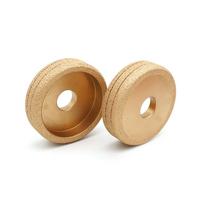
- Metal bond: a metal matrix that holds diamond firmly. Hard-wearing and durable, the standard for concrete grinding and heavy cutting.
- Resin bond: a softer, cooler-cutting matrix. Used for polishing pads, fine grinding and finishing, where heat control and a fine finish matter.
- Vitrified bond: a glass-like matrix, used in some precision grinding; harder and more brittle than resin.
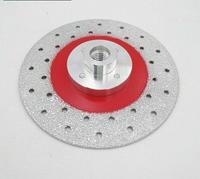
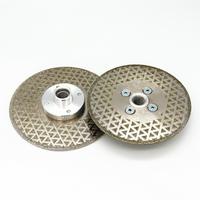
- Brazed and electroplated: single-layer bonds applied to a steel body, rather than a deep matrix. Sharp and aggressive, but with a finite life because there is no depth of diamond behind them.
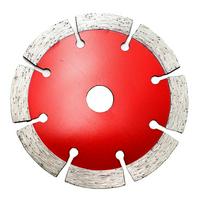
- Sintered: diamond mixed through a deep metal layer, so fresh diamond appears as the tool wears - long-lived for heavy work.
For the difference between two common families, see our comparison of resin filled and metal bond cup wheels.
Bond hardness: the counterintuitive rule
Bond hardness is the most misunderstood specification for buyers, because it works backwards from intuition:
- Hard material: use a softer bond, so fresh diamond is exposed quickly as the grains blunt.
- Soft, abrasive material: use a harder bond, so the diamond is not lost before it has cut.
Bond hardness is about matching the tool's wear rate to the work, not about the bond being stronger or better. A harder bond is not an upgrade - it is a match or a mismatch. For the full explanation, see bond hardness explained.
What else sits in the matrix
- Diamond type and size: natural or synthetic, and the grit size that sets the finish and cutting speed.
- Diamond concentration: how much diamond is in the matrix, which affects cutting life and cost.
- Fillers and additives: materials that change the bond's wear rate or cooling behaviour, and which affect consistency between batches.
- Segment geometry: segment shape and slot pattern work with the bond to clear debris and control cutting.
What buyers should specify and check
- Specify the application, not just the bond: give the material and the machine, so the bond can be matched.
- Ask for the bond type and hardness explicitly, rather than accepting 'a good bond'.
- Check consistency: the bond is where batch-to-batch variation shows first.
- Test on the real material: a tool's bond only proves itself on the surface it is meant for.
- Watch the failure mode: glazing means the bond is too hard, rapid wear means too soft - both are specification problems, not just user error.
For the buying process around this, see the wholesale sourcing checklist and the OEM specification guide.
Safety
The bond affects how a tool behaves, including how predictably it cuts and how it fails. Specify tools with accurate ratings, inspect them before use, and never use a tool outside its intended application. Wear appropriate PPE, respect maximum RPM and follow the manufacturer's instructions. For the practical side of using bonded tools, see the tool ranges.
Bond matrix in short
- The bond controls how diamond is released, which decides performance and life.
- Metal bond for heavy work, resin for polishing, brazed and plated for sharp single-layer tools.
- Soft bond for hard material, hard bond for soft material.
- Specify the application; check bond type, hardness and batch consistency.