ES
Of all the numbers on a diamond grinding wheel, bond hardness confuses buyers the most, because the rule seems backwards. A soft bond is the right choice for hard material, and a hard bond is right for soft material. Once you understand what the bond actually does, the rule makes perfect sense - and getting it right is the difference between a wheel that cuts all day and one that glazes or sheds its diamond in minutes.
What the bond does
Diamond does not sit loose on a wheel; it is held in a bond, a matrix of metal, resin or another material. The bond's job is to hold each diamond grain just long enough for it to cut, then wear back so the blunt grain falls away and a fresh, sharp one is exposed. The rate at which the bond wears is what 'hardness' describes - a hard bond holds on longer, a soft bond lets go sooner.
Why soft bond for hard material
Grind something hard and dense, like cured concrete, and the diamond grains blunt quickly. You need them replaced quickly, so you want a bond that wears back fast and exposes fresh diamond before the dull grains start rubbing. That is a soft bond. On hard material a hard bond is the wrong choice: it grips the blunted diamond too long, the wheel polishes instead of cutting, and it glazes over.
Why hard bond for soft material
Grind something soft and abrasive, like marble, asphalt or green concrete, and the opposite happens. The material itself wears the bond away quickly, so a soft bond would disappear before the diamond had done much work. A hard bond resists that wear and keeps the diamond in place long enough to be useful. Put a soft bond on an abrasive material and you simply burn through wheels.
The rule, stated plainly
- Hard material (cured concrete, dense stone): soft bond, so fresh diamond keeps appearing.
- Soft, abrasive material (marble, asphalt, green concrete): hard bond, so the diamond is not lost too soon.
It is the wear rate that has to match the work, not the bond's strength on its own. That is why experienced operators judge a wheel by how it behaves rather than by a specification alone.
Reading the signs of the wrong bond
- Glazing and slow cutting: the bond is too hard for the material; it is holding blunt diamond instead of releasing it.
- Very short life with a fast cut: the bond is too soft and the diamond is being shed before it wears out.
- Heat and burning on stone: often a bond that is too hard, causing friction instead of cutting.
- Uneven wear or chunks missing: usually technique or an over-hard bond, not the material.
A glazed wheel can sometimes be recovered by working it briefly on an abrasive surface to strip the glazed layer - see why blades glaze over and how to dress them.
Bond types you will meet
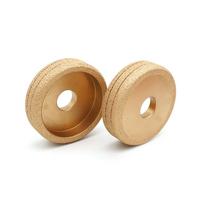
- Metal bond: hard, durable, the default for concrete and aggressive grinding.
- Resin bond: softer and cooler, better for finishing stone and sensitive surfaces.
- Resin filled: a resin-filled face that glides and leaves a smoother finish - see resin filled vs metal bond cup wheels.
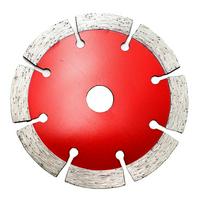
For a durable concrete workhorse, a metal bond arrow segment wheel is typical; for a cooler, finer stone finish, a resin filled wheel is the match.
Safety
Whatever the bond, grinding produces dust and sparks, so wear a dust mask or respirator, eye protection and hearing protection, and use extraction or water to control dust. Respect the wheel's maximum RPM, use the guard and side handle, inspect the wheel for damage before use and follow the manufacturer's instructions. Match the tool's speed to the wheel; overspeeding a wheel is one of the fastest ways to make it fail.
Bond choice in short
- Soft bond for hard material, hard bond for soft material.
- Judge by behaviour: glazing means too hard, fast wear means too soft.
- Metal bond for heavy concrete work, resin and resin filled for stone finishing.
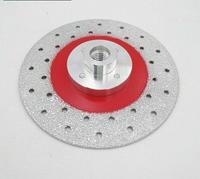
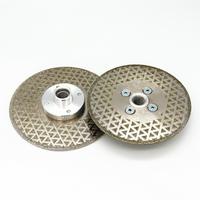
- Browse the grinding disc range to match bond to job.