ES
Two cup wheels can look almost identical on the shelf and behave nothing alike in use. The difference is the bond - what holds the diamond to the body - and the way the gaps between the segments are treated. Pick the wrong one and you either fight a wheel that grabs and chips, or spend all day grinding without removing the material in front of you.
What 'resin filled' actually means
A diamond grinding cup is made up of segments brazed or sintered onto a steel body, with gaps between them. On a resin filled wheel those gaps are packed with a resin compound so the working face is effectively continuous. That one change tames the wheel: there is nothing for the leading edge to catch on, so it glides across the surface instead of biting into it.
The cost is aggressiveness. With no open gullets to clear swarf quickly, a resin filled cup removes material more slowly - but it leaves a far smoother, more uniform surface. A resin filled diamond cup wheel is built exactly for that job.
What a metal bond cup wheel does
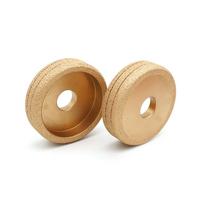
A metal bond cup uses a metallic matrix to hold the diamond, and leaves the segments proud with open gaps between them. The exposed segment edges cut hard, and the gullets throw dust out so the wheel keeps biting. These wheels are the workhorses for concrete preparation: coating removal, levelling, and stock removal where speed matters more than finish. They last a long time because the metal matrix wears slowly and keeps exposing new diamond.
The trade-off in one table's worth of terms
- Aggressiveness: metal bond cuts fast; resin filled cuts gently.
- Finish: resin filled leaves a smooth surface; metal bond leaves a coarser scratch pattern.
- Chipping on edges: resin filled is far safer on stone edges and brittle materials.
- Dust and swarf: metal bond clears it through open gullets; resin filled relies on airflow and often a shroud.
- Life: both wear back, but metal bond generally outlasts resin filled on abrasive work.
When to choose resin filled
- Finishing and smoothing marble, granite and other stone after a coarse grind.
- Working near edges or on brittle surfaces where a grabbing segment would chip.
- Light stock removal and surface refinement rather than heavy levelling.
- Jobs where a uniform, ready-to-polish surface matters more than speed.
A coarse resin filled cup wheel for granite and marble sits at the start of that finishing sequence, removing heavier scratches before finer grits take over.
When to choose metal bond
- Concrete floor preparation, levelling and coating removal.
- Removing tile adhesive, epoxy, paint or laitance.
- Anywhere you need to move a lot of material quickly.
- Rough shaping of stone where the finish line comes later.
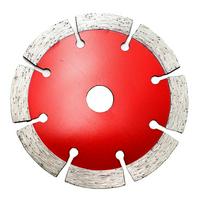
For heavy concrete prep, an arrow segment grinding wheel uses that metal-bond bite to break through coatings and high spots.
Using either wheel well
Let the wheel come up to speed before touching the surface, then move steadily in overlapping passes rather than dwelling in one spot. Dwelling burns the bond and leaves a hollow; consistent movement gives an even scratch pattern. Match the wheel's maximum RPM to the tool, and use a dust shroud with extraction for dry work. On a resin filled wheel, do not force it - the point of the filled face is gentle, even contact.
Safety
Grinding concrete and stone produces silica dust that damages lungs, so a dust mask or respirator plus a dust shroud and extraction is not optional. Wear eye protection, hearing protection and gloves, clamp or brace the workpiece, use the tool guard and side handle, and respect the wheel's RPM rating. Follow the manufacturer's instructions for the material and never run a damaged or unbalanced wheel - see signs your cup wheel needs replacement before a worn wheel fails.
Bottom line
- Concrete prep, coatings, speed: metal bond.
- Stone finishing, edges, smoothness: resin filled.
- Heavy removal first, resin filled refinement second - that order covers most jobs.
- Browse the grinding disc range to pair the two stages.