
 ES
Rock panels and flexible stone veneers are thin slices of real stone bonded to a backing so they can bend and wrap. They look like solid stone but behave like a laminate, and that changes how they must be cut. A thick or blunt blade grabs the thin stone and tears the sheet; a thin, sharp diamond blade slices it cleanly. For installers, the blade choice is the whole job.
Why a thin blade is essential
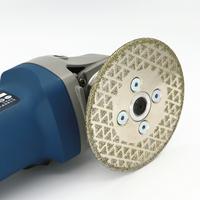
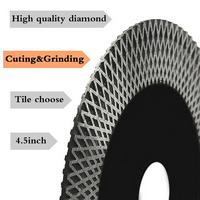
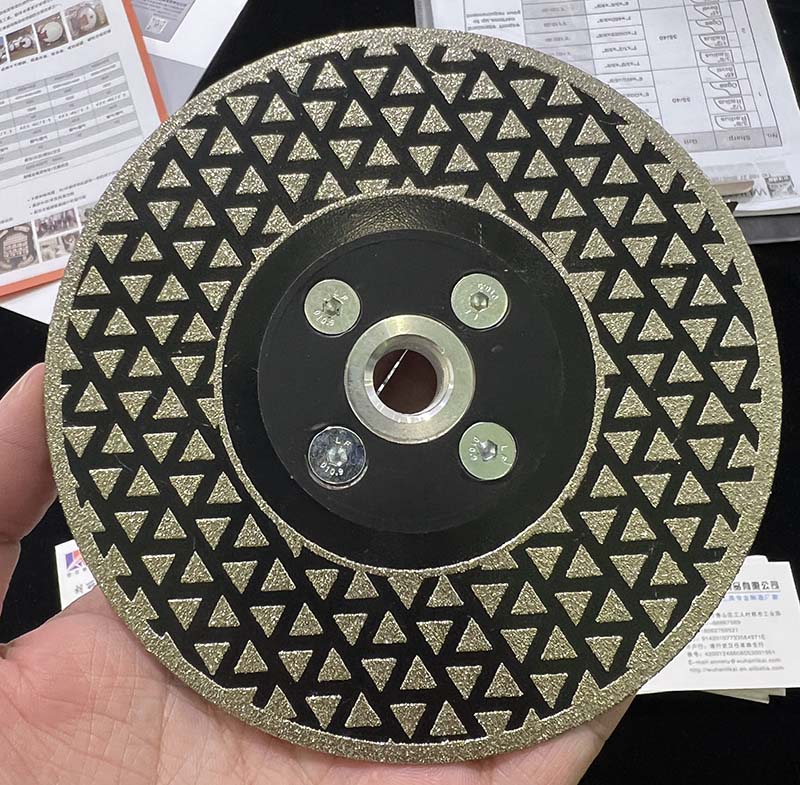
A rock panel is only a few millimetres of stone on a flexible backing. A thick kerf removes too much material, stresses the thin stone and pulls at the backing, which frays and delaminates. A thin blade cuts a narrow kerf, generates less heat and stresses the panel far less. A thin blade for glass, ceramic and rock panels is exactly the tool for the job - fine, sharp and slim.
Setting up the cut
- Support the panel fully and flat. A flexible panel that is unsupported flexes under the blade and the cut wanders or the backing tears.
- Cut with the stone face up or down according to the blade and the panel; follow the panel manufacturer's guidance, since the finish is easy to chip.
- Use a straight guide for long cuts so the blade is not steered.
- Mask or tape the cut line on the finished face if the panel is delicate, to reduce chipping at the edge.
- Clamp the panel so it cannot move during the cut.
Cutting technique
- Keep water flowing if the blade is rated for wet cutting; it cools the cut and flushes the slurry.
- Feed steadily and moderately - do not force a thin blade, which bends and wanders under pressure.
- Keep the blade straight through the cut; steering a thin blade at an angle cuts a wide, ragged kerf.
- Support the offcut as you finish so the panel edge does not break away.
- Cut from the finished face where the manufacturer recommends it, so any small chip appears on the concealed side.
Edges, corners and openings
Panel edges often sit against another panel or a trim, so the cut edge is usually concealed - but corners and openings still need care. For internal corners, cut up to the line and finish with a fine hand tool rather than over-running the blade. For round openings, a thin core bit or a small hand pad cleans up the cut. See hand polishing pads for edge work for finishing.
Why a sharp blade matters more here
A rock panel is thin, so a dull blade cannot be pushed through it the way it might be pushed through a thick tile - the panel just tears. Sharpness is not a nice-to-have on this material; it is the difference between a clean cut and a ruined sheet. Replace or dress the blade when it stops cutting freely. For related advice on thin cuts, see thin diamond blades for jade, glass and ceramic.
Safety
Wear eye protection and a dust mask or respirator, and use water or extraction to control dust. Secure the panel, keep hands clear of the blade, respect the blade's maximum RPM and keep the guard fitted. Flexible panels can whip if they come loose, so keep them clamped and cut away from your body. Follow the manufacturer's instructions for both the blade and the panel system.
Rock panel cutting in short
- Thin, sharp blade - a thick or blunt blade tears the panel.
- Support the panel fully and use a guide.
- Steady, moderate feed; keep the blade straight.
- Browse the diamond saw blade range for thin cutting blades.