ES
Cutting glass with a diamond disc is nothing like cutting tile. Glass is hard, brittle and unforgiving, and a disc that is too coarse, spun too fast or run without water will not just cut badly - it can shatter the panel and throw fragments. Used properly, a thin diamond glass disc cuts glass and glass tile cleanly, but the safety margins are narrower than on any other material.
Why glass needs its own disc
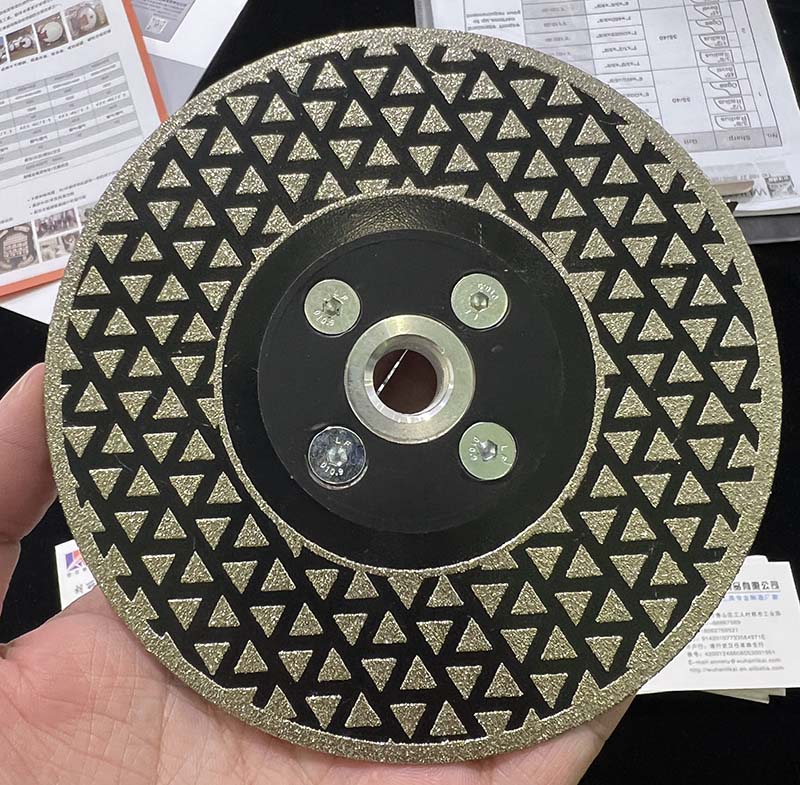
A glass disc is thin and fine, with a fine diamond layer on a slim steel body. The thin kerf removes little material, which limits the stress on the glass, and the fine diamond leaves a clean edge rather than a coarse one. A thin diamond glass cutter disc is built exactly for this - it is not a general-purpose blade with a different label.
The three rules that keep glass intact
- Water, always. Glass cracks from heat as much as from stress. A constant water feed cools the cut and flushes the fine glass dust away.
- Low speed. Glass fails under friction. Run the tool slowly and let the fine diamond grind through rather than slashing at it.
- Light, steady feed. Pushing the disc into glass is the fastest way to a crack. Let the disc cut at its own pace.
Cutting straight lines in glass
- Support the glass fully and flat; unsupported glass flexes and cracks.
- Use a straight guide so the cut is true and the disc is not steered.
- Start the cut at the edge and feed steadily in one direction; sawing back and forth loads the glass.
- Keep the disc perpendicular to the surface so the kerf stays vertical.
- Ease off as you approach the far edge, and support the offcut so it cannot drop and crack the panel.
Cutting glass tile and thin glass
Glass tile is more forgiving than a glass panel but still chips easily. Use water, keep the speed low and support the underside. For small glass pieces and glass tile, an even finer disc may suit better - a glass and ceramic cutting blade handles both glass and thin tile with the same care.
Drilling and shaping glass
Holes in glass are drilled rather than cut with a disc, using a thin core bit with plenty of water and light pressure - see electroplated core bits for glass and ceramic tile. Edges are shaped and polished with hand pads, not discs, because a disc cannot follow the edge safely.
Safety - read this before cutting glass
- Eye protection and face protection: glass throws sharp fragments. Wear goggles and consider a face shield.
- Cut-resistant gloves: to handle cut glass and offcuts safely.
- Secure the glass: clamp or support it so it cannot move or fall.
- Keep water away from electricity: use an RCD or GFCI and keep leads clear of the water.
- Low speed and light pressure: treat any heat or resistance as a warning to stop.
- Handle edges with care: freshly cut glass edges are extremely sharp; store and transport panels securely.
Glass cutting in short
- Thin fine disc, low speed, constant water, light feed.
- Support the glass and use a guide; ease off at the exit.
- Holes are drilled, not cut; edges are polished by hand.
- Protect eyes, hands and the panel - see the diamond blade range for glass-suitable discs.