
 ES
Grit size is the number that decides how a diamond tool behaves, and it works the way most people expect: coarse grit removes material fast and leaves a rough finish, fine grit removes little and leaves a smooth one. Choosing the right grit for each stage is what makes a job efficient, and getting it wrong wastes time in both directions - too coarse and you create work for yourself later, too fine and you never remove the damage.
What grit size means
Grit size describes the diamond particles in the tool, measured by how many fit through a standard sieve - so a higher number means smaller particles. A tool marked with a low number has coarse diamond that cuts aggressively; a high number has fine diamond that refines and polishes. Because it is a size, not a strength, the same material can be sharp or gentle purely depending on the grit, which is why grit choice is the first decision in any sequence.
Grit by application
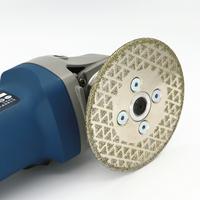
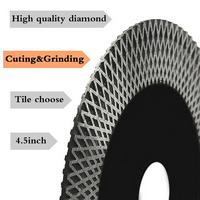
- Cutting: blades usually use a medium grit that balances speed against edge quality. Too coarse chips the material; too fine cuts slowly and glazes.
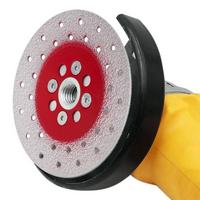
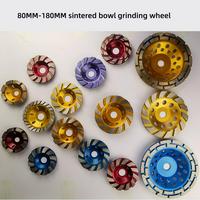
- Grinding and levelling: coarse grit removes material and flattens; it is the first stage before any finishing.
- Honing: mid grit removes the coarse scratch pattern and prepares for polishing.
- Polishing: fine grits step the surface to a gloss, each removing the scratch of the previous step.
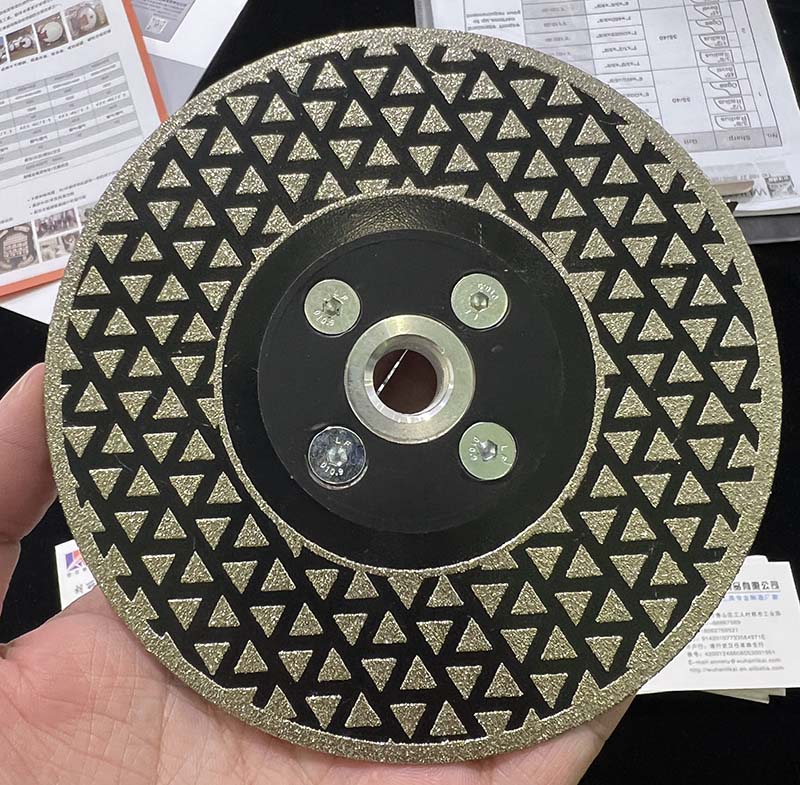
For a cutting blade that has to balance speed and finish on hard tile, a tile blade uses a grit chosen for clean cutting rather than aggressive removal, while a grinding wheel uses coarser diamond because its job is to remove material.
Why sequences matter more than any single grit
The most common grit mistake is jumping. Going straight from a coarse grinding wheel to a fine polishing pad leaves scratches that the fine pad cannot remove - it only polishes over them. Each grit must fully remove the scratch pattern of the one before it, which is why sequences step gradually rather than leaping between ends of the range.
- Start with the coarsest grit that will remove the existing damage efficiently.
- Step through the intermediate grits rather than skipping.
- Spend time at each grit until the previous scratch has gone.
- Finish with the finest grit needed for the required gloss, not the finest available.
The same logic drives the full polishing sequence described in our polishing pad troubleshooting guide.
Grit and the material
- Hard, dense material: may need a finer grit to cut cleanly, and a bond that exposes fresh diamond.
- Soft, brittle material: tolerates finer grit and chips with coarse, so finer is safer for a clean edge.
- Abrasive material: wears grit quickly, so match the bond as well as the grit.
- Visible surfaces: demand a full grit sequence; hidden or covered surfaces can stop earlier.
Reading grit on a product
Grit may be stated directly, or implied by the product type - a 'coarse' grinding wheel or a 'fine' polishing pad. Where a range is offered, the naming usually runs from coarse to fine across the pads. When grit is not stated, judge the tool by its intended stage: cutting and grinding are coarse relative to honing, and polishing pads are fine. For how the bond works with the grit, see the bond matrix explained.
Safety
Whatever the grit, diamond tools produce dust and require the same precautions: wear a dust mask or respirator, eye and hearing protection, use water or extraction to control dust, secure the workpiece and respect maximum RPM. Follow the manufacturer's instructions for the tool and the material, and keep the grit sequence in mind so you are not forcing a fine tool to do a coarse tool's job.