
 ES
Shaping a marble edge is one of the first real fabrication skills a beginner learns, and it is also one of the easiest to get wrong in a way that cannot be fixed. Marble is soft enough to shape quickly and brittle enough to chip if rushed. A diamond profile wheel does most of the work - the skill is in choosing the right profile, setting up properly and letting the tool cut instead of forcing it.
What a profile wheel is
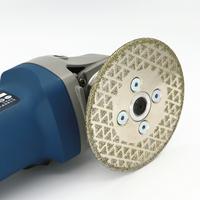
A profile wheel carries a shaped diamond edge that matches a specific profile: bullnose, demi-bullnose, ogee, bevel and so on. Run along the edge of the stone, it grinds that shape into the marble in one controlled form rather than several hand-cut passes. A vacuum brazed profile wheel holds the shape precisely and cuts fast, which makes it the practical choice for a beginner working on a machine.
Choosing a profile
- Full bullnose: a half-round edge - soft, comfortable and forgiving on a visible edge.
- Demi-bullnose: a rounded top with a flat base, common on countertops.
- Ogee: a decorative S-curve that catches light and hides a thicker edge.
- Bevel and chamfer: angled flat edges, clean and modern.
- Eased edge: a small radius that removes the sharpness without changing the look much.
Match the profile to the stone and the look: marble suits soft, rounded profiles, which are also more forgiving of small mistakes in technique. Shops that cut profiles on a machine spindle use the same idea in a vacuum brazed router bit.
Setting up before you cut
- Support the piece fully and clamp it so it cannot move or flex - marble cracks under uneven pressure.
- Check the wheel is the right profile and is sharp and undamaged.
- Set the machine so the wheel meets the edge at the correct angle; a wrong angle cuts the profile in the wrong place.
- Keep a steady water supply ready; marble burns and cracks without cooling.
- Do a trial shape on an offcut if you have one, especially with an unfamiliar profile.
Cutting the edge
- Take the shape in two or three staged passes rather than one heavy cut - marble chips when a profile is forced.
- Keep the wheel moving along the edge at a steady speed, and never stop in one place.
- Keep water flowing throughout and check that the slurry is being flushed away.
- Follow the profile in one direction and keep the wheel aligned; letting it drift rounds the wrong part of the edge.
- Blend the shape into the top and bottom of the edge so there is no step where the profile starts.
Finishing the shaped edge
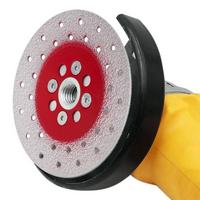
Profiling leaves a matte, scratchy edge that must be polished to match the surrounding marble. Step through finer pads - by hand or machine - until the gloss matches. A vacuum brazed hand profile wheel helps reach the shape, and the polishing pads that follow do the finishing. Skipping the polish leaves an obvious dull ring on a finished piece, so treat shaping and finishing as one job.
Safety
Wear eye protection and a dust mask or respirator, use water to control dust and heat, and keep water away from electrical connections with an RCD or GFCI. Secure the workpiece against movement, keep hands clear of the spinning wheel and respect the tool's speed. Take extra care on marble, which can chip suddenly - keep the wheel moving and never force the cut.
Beginner's checklist
- Choose a profile that suits marble - soft and rounded is forgiving.
- Support and clamp the piece; keep water flowing.
- Cut in stages, keep moving, keep the wheel aligned.
- Polish the edge to match - browse the grinding and profiling range for wheels and pads.