
 ES
Profiling a stone edge turns a plain slab into a finished piece - a bullnose that softens a worktop, an ogee that catches the light, a bevel that frames a vanity. The tool that cuts those shapes is the router bit, and for most stone shops the vacuum brazed type is the workhorse: sharp from the first pass, aggressive enough to shape hard stone, and available in almost any profile.
How a vacuum brazed router bit works
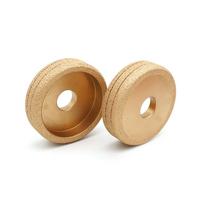
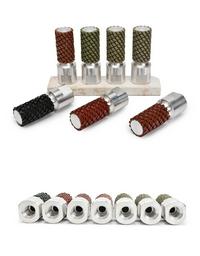
A router bit carries a shaped diamond edge that matches the profile you want. In a vacuum brazed bit, the diamond is brazed onto that shaped steel body in a single layer, held by a strong bond rather than buried in a matrix. The result is a bit that cuts fast and holds its profile precisely, because the shape is ground into the steel underneath rather than relying on a wearing matrix to keep it. A vacuum brazed profile wheel is the typical tool for this work.
The profiles you can produce
- Bullnose (full and demi): a rounded edge, the most common finish on countertops.
- Ogee and waterfall: decorative S-shaped profiles that need a matching bit.
- Bevel and chamfer: straight angled edges for a clean, architectural look.
- Square and eased edges: the simple edges that most jobs still need.
- Custom profiles: any shape ground into a bit, for matching an existing edge.
Running a router bit without ruining the stone
- Take the profile in stages. Cut the shape in several passes rather than in one, so the bit is not overwhelmed and the edge does not chip.
- Keep water flowing. Water cools the bit and flushes slurry; a dry bit overheats and loses its edge.
- Match the feed and speed. Too fast and the profile is rough; too slow and the bit rubs and burns the stone.
- Support the edge. An unsupported edge flexes and chips - secure the piece before profiling.
- Follow the bit's direction. Feeding the wrong way pulls the bit and damages the profile.
Where vacuum brazed bits fit
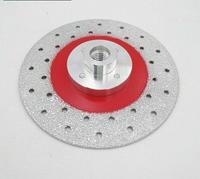
A vacuum brazed bit cuts fast and holds its shape, which makes it ideal for production profiling on granite, marble, quartz and engineered stone. Its limitation is life: the single brazed layer wears out and cannot be dressed back, so a shop doing heavy continuous profiling may want bits that can be re-sharpened or a rotation of spares. For the lighter, more controlled shaping that a hand machine can do, a vacuum brazed hand profile wheel covers edges in place.
Keeping a router bit alive
- Never run it dry or at excessive speed; heat is what kills the brazed layer.
- Take light profiling passes rather than deep cuts that load the bit.
- Keep the bit clean - slurry packed in the profile stops it cutting evenly.
- Store bits so the shaped edge cannot knock against other tools.
- Retire a bit when the profile stops cutting cleanly, before it burns the stone.
For a deeper look at extending bit life, see our guide to maintaining diamond router bits.
Safety
Profiling throws water, slurry and chips, so wear eye protection and a dust mask or respirator, and keep water away from electrical connections with an RCD or GFCI. Secure the workpiece, check the bit is tight and undamaged before use, respect the tool's speed and follow the manufacturer's instructions. Never reach toward a spinning bit, and keep hands clear of the path of the profile.
Router bits in short
- Vacuum brazed bits shape stone edges fast and hold their profile.
- Take the profile in stages, keep water flowing, support the edge.
- Life is finite - manage heat and store bits carefully.
- Browse the grinding and profiling range to match a bit to the profile you need.