ES
M14 is not a blade size or a diamond grade - it is a thread standard, and it decides which tools a cutting disc will actually mount on. For anyone buying diamond discs for a grinder, a few minutes spent checking the thread and the disc rating prevents returned orders and unsafe setups alike.
What M14 means
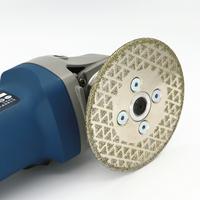
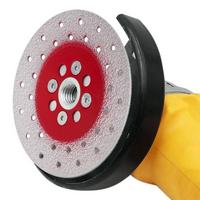
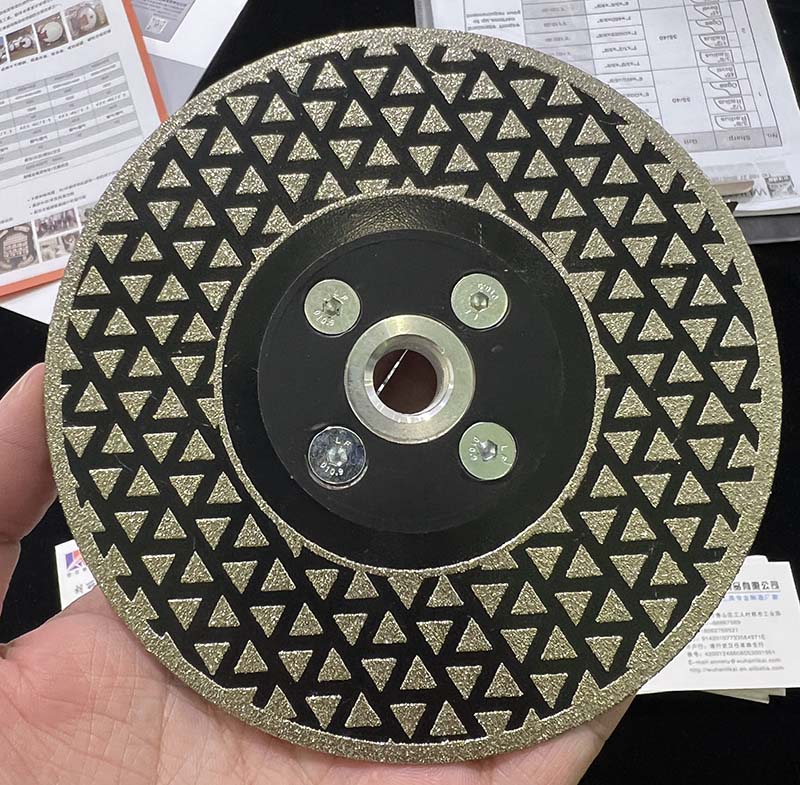
M14 is a metric thread measuring 14 mm across. On diamond discs it refers to the threaded centre hole; on grinders it refers to the spindle the disc screws onto. An M14 disc threads directly onto an M14 spindle with no separate nut or flange adapter, which is why it is common on European-style angle grinders. The critical point is that thread standards do not cross over. A 5/8-11 (imperial) disc will not fit an M14 spindle, and an M14 disc will not fit a 5/8-11 spindle, so the thread has to be confirmed before anything else. A double-sided disc with an M14 thread shows how the threaded bore is built straight into the disc body.
Common diameters and what they suit
- 100 mm: tight, precise work such as small tile cuts and detail trimming, where a smaller disc gives more control.
- 115 mm: the most common all-round size for handheld grinders, covering general tile, stone and concrete cutting.
- 125 mm: more reach and faster material removal on larger cuts, but it demands a grinder rated for the larger disc.
Diameter affects more than reach. A larger disc needs a lower maximum RPM to keep the speed at the outer edge within its rating, so a 125 mm disc usually carries a lower RPM limit than a 100 mm disc of the same build.
Typical applications
M14 discs cover a wide range because the thread suits many tool types. The most common jobs are cutting tile, porcelain, stone and concrete, and cleaning up or shaping an edge after a cut.
- Cutting: straight cuts in tile, marble, granite and concrete block.
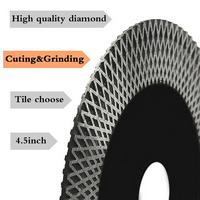
- Cutting and grinding in one: a 100-125 mm M14 cutting and grinding disc carries diamond on both the edge and the face, so one tool can cut and then dress the edge.
- Edge dressing: light grinding on a cut edge before profiling or polishing.
Buying checklist
- Thread: confirm M14 or 5/8-11 against the grinder spindle.
- Maximum RPM: the disc rating must meet or exceed the grinder's no-load speed.
- Diameter and thickness: match the disc to the depth of cut and the tool's capacity.
- Rim or face type: continuous rim for clean edges, turbo or segmented for faster cutting, double-sided for cut-and-grind work.
- Wet or dry rating: some builds are for wet use only, some for dry, some for both.
Reading the blade labels gives you thread, RPM and the wet/dry rating without guesswork, and a quick look at matching RPM ratings confirms the disc suits the tool.
Safety
Thread the disc fully onto the spindle so it seats flat, fit the guard, wear eye protection and hearing protection, and clamp the workpiece so it cannot move. Check the disc for cracks or a bent core before each use, and never exceed the rated RPM marked on it. Let the disc reach full speed before it touches the material, and follow the manufacturer's instructions for both the tool and the disc.
Browse the full cutting disc category to compare builds, and read how to choose a diamond blade for the material you cut most. Get the thread and the RPM rating right first, and everything else about the disc falls into place.