ES
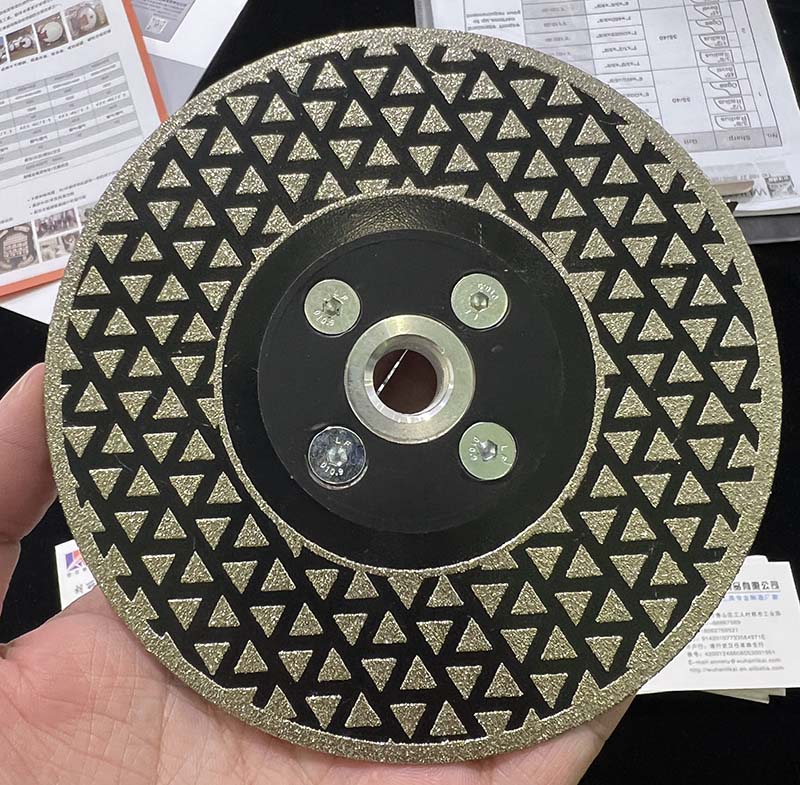
Grinding a concrete floor with metal bond wheels gets it flat and opens the surface, but it leaves a coarse scratch pattern that is nothing like a polish. Resin bond diamond sanding discs are what take over from that point. They refine the scratches left by grinding, stepping finer and finer until the floor reaches the gloss level the client asked for.
Where resin bond discs fit the sequence
Concrete polishing runs in two phases. The first uses metal bond tooling to remove material, level the slab and grind out defects. The second uses resin bond tooling - the sanding or polishing discs - to hone and polish, replacing the coarse scratches with progressively finer ones until the surface is smooth and reflective. A metal bond wheel cuts hard and lasts; a resin bond disc cuts finer and polishes, but would be destroyed doing the metal bond's job. Each phase does what the other cannot. For how the first phase works, see concrete floor preparation tools.
A resin bond diamond sanding disc is the workhorse of the honing stage, and floor machines often carry several at once to cover more area per pass.
Stepping through the grits
The rule on concrete is the same as on stone: never skip a grit. Each step must remove the scratch pattern of the one before it, or the finer grit simply polishes over scratches that stay visible. A typical sequence runs from a coarse honing grit up through the mid grits to the fine polishing grits, with each stage done in full before moving on. Skipping a step does not save time - it just leaves a floor with visible scratches that then has to be redone from further back.
The variables that decide the result
- Concrete hardness: dense, hard slabs need tooling that stays sharp; softer or green concrete wears the bond faster.
- Aggregate and colour: exposed aggregate and coloured concrete show every scratch, so the sequence has to be thorough.
- Moisture and curing: a slab must be properly cured and dry; polishing too early traps problems in the surface.
- Machine and speed: pass speed and machine weight change how much the disc removes, so keep it consistent.
- Disc condition: a worn or clogged disc polishes nothing; change it before it glazes.
Keeping the finish even
- Run overlapping passes in a consistent pattern across the whole floor.
- Keep the machine moving at a steady speed; slowing down in one area creates a different finish there.
- Work the whole slab at each grit before moving to the next.
- Watch for the point where the previous scratch pattern has disappeared, then step up - no earlier, no later.
- Control the dust or slurry the disc produces; contamination scratches a finish that is almost done.
Dust, slurry and safety
Polishing dry produces fine respirable dust, so use a vacuum with suitable filtration and wear a dust mask or respirator, eye protection and hearing protection. Wet polishing keeps the dust down but needs an RCD or GFCI on the supply and careful slurry management. Keep the machine's guards and handles in place, respect the tool and disc speed ratings, and follow the manufacturer's instructions for the concrete and the machine. Whether you work wet or dry, the finish is only as good as the control of the by-products.
Resin bond discs in short
- Metal bond grinds; resin bond hones and polishes.
- Step through the grits in order and never skip.
- Consistent passes, consistent speed, clean discs.
- Control dust or slurry throughout - browse the polishing tools range for discs and pads.