ES
A sintered bowl grinding wheel is built for volume. Where a thin brazed or plated wheel is a single sharp layer that cuts fast and wears out, a sintered bowl holds diamond throughout a thick matrix, so as the wheel wears fresh diamond keeps appearing. That is what makes it the choice for heavy stock removal and long runs of stone and concrete work.
How a sintered bowl wheel is made
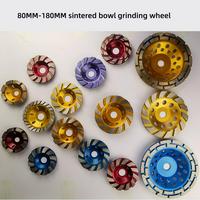
The diamond and a metal bond powder are mixed together and sintered under heat and pressure into a solid, deep layer on the wheel's rim. Because the diamond is distributed through the depth of that layer rather than sitting only on the surface, the wheel keeps cutting as the matrix wears back, exposing new grains as it goes. The bowl or cup shape gives a broad working face for grinding flat surfaces and edges, and the deep layer means the wheel survives far more than a single pass.
A large agglomerate sintered bowl grinding wheel is a typical example, with the diamond agglomerated so the grains stay in contact with the work and cut steadily rather than being shed early.
Where sintered bowl wheels are used
- Stone grinding and levelling: flattening uneven stone, removing deep scratches and preparing a surface for finer finishes.
- Concrete surface work: grinding dense surfaces, blending edges and taking heavy stock off where a thin wheel would not last.
- Edge and profile work: shaping and smoothing stone edges where a durable face is needed.
- Long production runs: shops that grind the same material day after day get more life from a sintered wheel than from a plated one.
Sintered versus brazed and plated wheels
- Sintered: deep diamond layer, longest life, best for heavy removal and repeat work; higher cost up front.
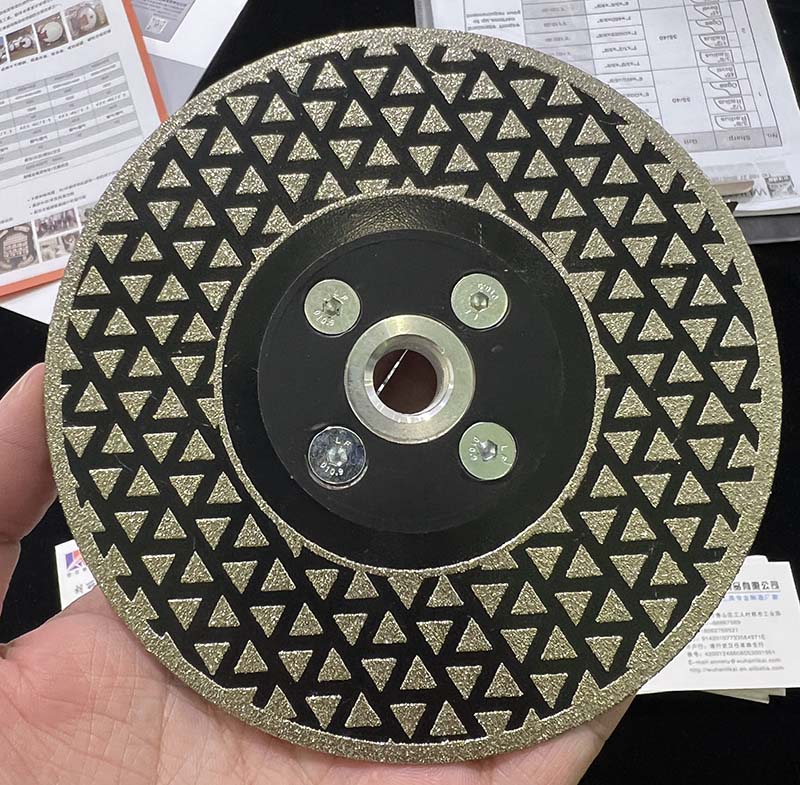
- Vacuum brazed: single layer brazed onto a shaped body, cuts fast and cool, good for medium work.
- Electroplated: single thin layer, sharpest and lowest cost, shortest life, best for light and finishing work.
The practical rule is to match depth of work to depth of diamond: heavy and repeated jobs want a sintered wheel, light and occasional jobs do not need the extra cost. For finishing sequences on stone, a resin filled cup wheel takes over once the sintered wheel has done the bulk removal.
Getting the most from a sintered wheel
- Match the bond to the material: a hard, dense surface needs a bond that releases diamond readily; a soft, abrasive one needs a bond that resists wear.
- Run the wheel at a speed appropriate to its diameter and the material, not simply the tool's maximum.
- Keep the wheel moving in overlapping passes to avoid hollows and burnt spots.
- Use water or extraction to control heat and dust, especially on concrete.
- Do not force a glazed wheel; if it stops cutting, dress it briefly on an abrasive surface.
Safety
Grinding stone and concrete produces silica dust and sparks, so wear a dust mask or respirator, eye protection and hearing protection, and control the dust with water or a suitable vacuum. Respect the wheel's maximum RPM, keep the guard in place, use the machine's handles and inspect the wheel for cracks or damaged segments before use. Follow the manufacturer's instructions for the material and the machine. For the wider context, see our notes on how bond hardness affects a grinding wheel and when a grinding wheel needs replacing.
Sintered bowl wheels in short
- Deep sintered diamond for heavy, repeated stock removal.
- Used on stone levelling, concrete work, edge shaping and production runs.
- Higher cost, longer life than brazed or plated wheels.
- Match the bond to the material and keep the wheel cool - browse the grinding disc range for options.