
 ES
Porcelain tile is one of the hardest materials a core bit has to get through on a kitchen or bathroom job. It is dense, hard and glazed on both faces, and it is unforgiving of a bit that depends on a metal bond wearing back to stay sharp. Vacuum brazed core bits take a different approach, which is why they are common on porcelain tile work.
Why porcelain is hard on core bits
Porcelain is pressed denser and fired harder than standard ceramic, so it has almost no porosity to help a bit bite. A sintered bit relies on the metal bond wearing back to expose fresh diamond, and on hard porcelain the bond can glaze instead - the bit spins, heats up and stops cutting. The hard, smooth surface also lets a worn bit skate rather than bite, which is what makes porcelain feel so unforgiving compared with softer tile.
What vacuum brazed means for a drill bit
A vacuum brazed core bit has a single layer of diamond brazed directly onto the steel tip. There is no powder bond to wear through, so the diamond is exposed from the first turn and the bit cuts porcelain immediately. That is the advantage on hard, dense tile where a sintered bit would need time to open up. The trade-off is the single layer: on very abrasive material the diamond is used up rather than continuously renewed, so brazed bits are matched to hard, brittle materials rather than long runs of abrasive stone.
Sizes and formats
- Common tile sizes run from small pilot holes up to large core bits; a 5 mm to 150 mm vacuum brazed core bit range covers most plumbing and fixing holes.
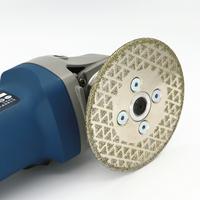
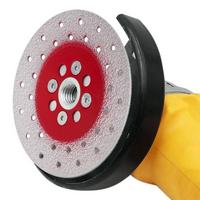
- M14 threaded shanks fit grinders; round or hex shanks fit standard drills.
- Some bits use a wax-filled pilot or a water-fed centre to cool the tip.
Technique for a clean hole
- Start at an angle: tip the bit until it bites, then straighten up once the cut has started. This stops the glazed surface skating the bit away.
- Low speed, light pressure: let the diamond cut. High speed and heavy pressure build heat and glaze the tip.
- Keep it cool: use water or a water-fed ring, or work slowly with a wax-filled bit to stop the tip overheating.
- Drill from the glazed face: entering on the glazed side gives a cleaner entry and less surface chipping.
- Support the tile: drill with the tile flat on a firm surface, and use a template for repeat holes.
Cooling and dust
Porcelain drilling makes fine dust and quickly heats a small bit. Water is the simplest control: it cools the tip and suppresses the dust at the same time. Water cooling tips for diamond core drilling covers how much flow is useful and why intermittent wetting is better than none. If water is not practical, wear a respirator and work in short passes so the tip never gets hot enough to glaze.
Buying checklist
- Shank type matching your drill or grinder.
- Diameter sized to the fitting, drain, anchor or pipe.
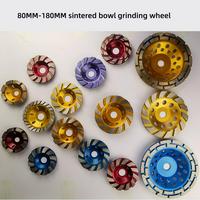
- Diamond layer: brazed for hard porcelain, sintered for softer tile and long abrasive runs.
- Single bit or a kit, depending on how many holes a job needs.
Safety
Wear eye protection and a dust mask, clamp the tile, and keep the bit within its rated speed. Let the bit reach speed before contact, do not force it, and follow the manufacturer's instructions for the tool and the bit. A bit that has lost its diamond layer will only rub and heat the tile, so check the tip honestly before a critical hole.
See the diamond drill bit range, including an M14 diamond core drill bit and an M14 vacuum brazed hole saw kit, and read how to drill tile without cracking it. Sharp diamond, low speed and steady cooling are what turn a risky porcelain hole into a routine one.