
 ES
Two blades can look identical on the outside and behave completely differently, because the difference lies in how the diamond is held on. Vacuum brazed and sintered blades are the two common constructions, and that choice decides how the blade cuts, how long it lasts and which materials it suits.
How each blade is made
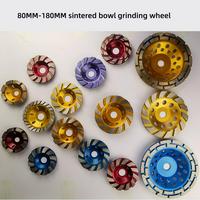
- Sintered: diamond grit is mixed with metal powder, pressed into a segment and furnace-sintered onto the steel core. The diamond is distributed through the depth of that segment, so fresh grit is revealed as the bond wears.
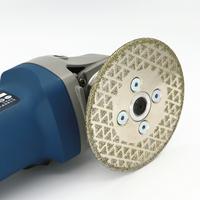
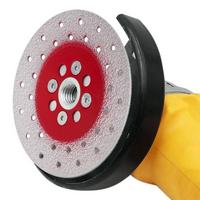
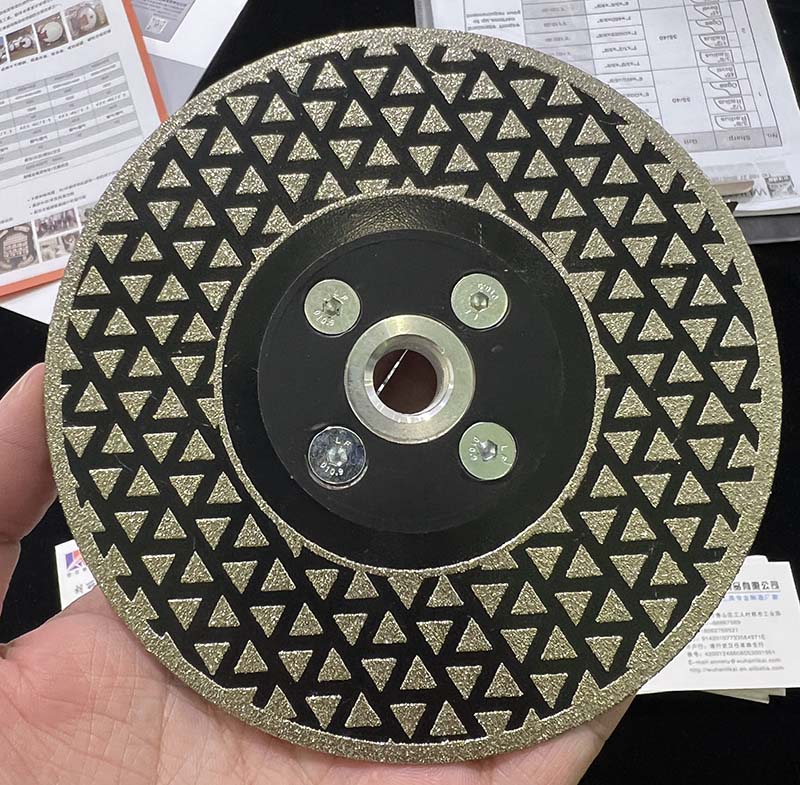
- Vacuum brazed: a single layer of diamond is brazed directly onto the steel body in a vacuum furnace. With no powder bond, the diamond sits right at the surface and is exposed from the first revolution.
How they cut differently
A sintered blade cuts like a self-sharpening wheel. As the metal bond wears back, dull diamond falls away and new grit emerges, which is why sintered blades hold up over long runs on abrasive stone such as granite and concrete. A vacuum brazed blade works differently: with no bond to wear back through, the full diamond layer is exposed immediately, so it feels sharp and aggressive from the very first cut. How diamond tools are made covers the same trade-off across hot-pressed, laser-welded and brazed builds.
Where each fits
- Sintered: granite, concrete, abrasive natural stone and long production runs, where total cutting life matters more than initial sharpness.
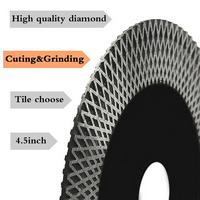
- Vacuum brazed: hard, thin, brittle or heat-sensitive materials, precision cutting and thin blades. A thin glass, ceramic and rock panel blade is a typical vacuum brazed build, because a thin single layer keeps the kerf narrow and the cut cool.
Life and cost
Neither construction is simply better. A sintered blade usually delivers more total cutting per blade on abrasive stone; a vacuum brazed blade often cuts faster and cleaner on hard, thin material but has a single layer to wear through. That is why cost per cut - not cost per blade - is the number to compare.
Matching the blade to the job
In practice the choice usually comes down to three questions. What is the material? Granite, concrete and abrasive natural stone favour a sintered blade, because it keeps renewing diamond and holds its cutting life over a long run. Hard, thin or brittle material such as porcelain, glass, thin tile or rock panel favours a vacuum brazed blade, because it bites from the first turn and holds a narrow kerf.
How long is the run? A workshop cutting metres of stone every day will usually get more total cutting from sintered, while an installer making a handful of precise cuts is often better served by the sharper brazed edge. What finish is needed? Where the cut is the visible edge, the cleaner bite of a brazed blade on hard material can leave less edge chipping, which saves a finishing step later.
Choosing checklist
- Material: abrasive stone points to sintered; hard, thin or brittle points to vacuum brazed.
- Job length: long runs favour sintered; short, precise cuts suit brazed.
- Edge finish: brazed often leaves a cleaner edge on hard material.
- Tool and RPM: confirm the blade is rated for your grinder.
Safety
Fit the guard, wear eye protection and a dust mask, and clamp the workpiece. Inspect the blade for cracks or missing diamond before each use, never exceed the rated RPM, and follow the manufacturer's instructions. A vacuum brazed blade that has lost its single diamond layer is finished, so check the cutting edge honestly before relying on it.
Compare both builds in the cutting disc range, including a ceramic and tile cutting blade, and read how to choose a diamond blade before your next order.