ES
Porcelain and quartz are the two materials that break the usual drilling rules. Porcelain is sintered hard throughout, so a hole saw that works on ceramic can stall on it, and quartz is a dense mix of stone and resin that blunts tools quickly. Milling bits handle both by grinding away the material in a controlled path rather than forcing a hole through it, which makes them the tool of choice for enlarging, shaping and profiling these surfaces.
What a diamond milling bit does
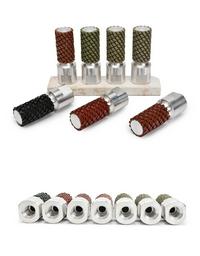
A milling bit is a small diamond tool - often a cylinder, cone or drum - that grinds the material as it is moved along a path. Instead of drilling a fixed diameter hole, it removes material wherever the bit is guided, so it can enlarge an existing opening, shape a curve, or cut an irregular form. Because it grinds rather than cuts a fixed kerf, it works on materials that would chip or stall under a hole saw. A diamond milling and edging bit is typical of this family, shaped to reach into holes and along edges.
Why porcelain and quartz need milling
- Porcelain is uniformly hard: there is no soft core to ease a hole saw through, so a milling bit that grinds steadily works better than one that tries to slice.
- Quartz is abrasive and dense: it wears tools fast, so the tool needs a diamond that stays exposed and a technique that does not overheat it.
- Both chip at edges: milling lets the operator creep up to the finished size rather than cutting it in one risky pass.
- Both reject heat poorly: they build heat quickly, which makes cooling central to the job.
Types of milling bit
- Cone and taper bits: for enlarging holes and shaping the edges of an opening.
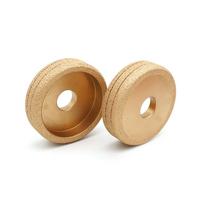
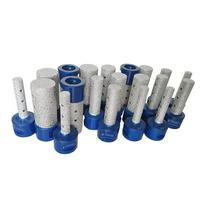
- Cylindrical and drum bits: for straight-sided milling and cleaning up a bore - a diamond drum wheel is a common example.
- Finger and burr bits: for following templates and shaping small profiles.
Milling without wrecking the bit or the workpiece
- Keep water flowing continuously; on porcelain and quartz, dry milling burns the bit and cracks the material.
- Take the work in small increments and creep up to the final size rather than removing it all at once.
- Keep the bit moving; dwelling in one spot overheats the diamond and marks the surface.
- Use a moderate speed and let the bit grind - too fast overheats, too slow rubs and glazes.
- Clear the slurry so you can see the cut and the bit is not packed with debris.
- Support the workpiece and clamp it, especially when milling near an edge or an existing hole.
Matching the bit to the material
Porcelain rewards a bit that grinds steadily and resists heat; quartz rewards a bit with durable diamond and an operator who does not force the cut. If one bit wears out quickly on quartz, the answer is usually a tougher diamond layer and a lighter touch, not more speed. For holes rather than shaping, a finger bit guided by a template gives more control than a fixed hole saw. Where a hole simply needs opening up a few millimetres, a cone milling bit is the tool for the job.
Safety
Milling porcelain and quartz produces fine silica dust and slurry, so wear eye protection and a dust mask or respirator, and use water to control both. Keep water away from electrical connections with an RCD or GFCI, secure the workpiece, keep hands clear of the spinning bit and respect the tool's speed. Follow the manufacturer's instructions for the bit and the material, and never force a bit that has stopped cutting.
Milling bits in short
- Grinding beats slicing on hard porcelain and dense quartz.
- Cool constantly, cut in small increments, keep the bit moving.
- Match the bit shape to the job - holes, edges or profiles.
- Browse the diamond bit range for milling and drilling accessories.