
 ES
A toolbox talk is five minutes at the start of the shift. Done well, it puts one specific risk in front of the crew while they are still thinking about the day. Done badly, it is a recitation that everyone has heard and nobody remembers.
The difference is specificity. "Be careful with blades" is not a talk. "Yesterday a blade grabbed because the panel was left unclamped and pinched the blade at the end of the cut, and here is what that looks like" is a talk. A guard set too high is a real finding, but it changes how much of the blade is exposed; it does not make the blade grab.
Structure of five minutes
Four parts, in this order.
- The task today. What the crew is doing, in one sentence, so the talk is anchored to real work.
- The one risk. A single hazard, described concretely, with a real example if one exists.
- The control. What specifically changes because of that risk. A behaviour, a check, or a piece of equipment.
- The question. One question to the crew, so the talk is a conversation rather than an announcement.
One risk per talk. A talk that covers five hazards covers none, because none of them is retained.
Topics that fit cutting work
The best topics come from the work itself, not from a generic list. These recur often enough to be worth a permanent rotation.
- Water where it should not be. A wet saw near a live socket, a hose running into a lift shaft, a puddle where someone will walk.
- The guard that was removed for one cut. Why it came off, what the alternative was, and what happened.
- Dust when the extraction was not connected. How to tell that capture has failed, and what to do about it.
- The blade that was the wrong size for the machine. How it was spotted, and what the speed marking means.
- The piece that moved while it was being cut. Why clamping matters more than holding.
- The last cut of the day. Most incidents happen when the crew is tired and the schedule is behind.
Each topic is a story with a control, not a rule. A crew remembers a story.
Making it stick
Ask the crew for the topic at least once a week. The person who saw the near miss is the best person to describe it, and a talk given by a colleague is heard differently from one given by a supervisor.
Keep a one-line record: date, topic, who led it. The record is not the point, but it demonstrates that the briefing happened, and it prevents the same topic being repeated for a month.
Follow up. If the talk was about extraction, check the extraction that afternoon. A talk that is not followed up teaches the crew that the talks do not matter.
Topics that do not work
Generic reminders, long lists, and anything read from a screen. Also avoid the talk that is really a disciplinary notice in disguise; the crew will recognise it and disengage from every subsequent talk.
Where there has been an incident, discuss it factually and without blame. A crew that expects punishment for reporting a near miss will stop reporting near misses, which removes the best source of information available.
The link to daily checks
Many talks end with a check that the crew can carry out immediately. A talk about blade condition ends with everyone checking their blade. A talk about water ends with a flow check on each machine.
That turns the talk into an action, which is the only thing that changes behaviour. The checks themselves are the subject of the daily routine, and the details for a saw are in the bridge saw check routine.
Tooling notes
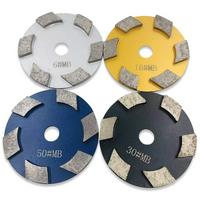
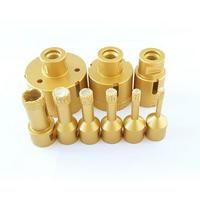
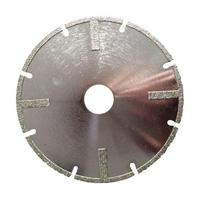
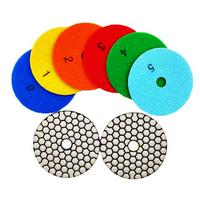
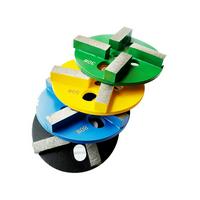
Talks about tooling are more credible when the tooling is present. A 125 mm diamond blade for granite, marble and concrete held up while explaining the speed marking is more effective than a slide. A 100 mm diamond cup wheel is useful for the dust and guard topics, since the shroud and the guard are visible and the failure modes are obvious. The diamond saw blade category and the grinding disc category give the range to draw examples from.
Safety
Run the talk before the crew starts, not during a break when half of them are absent. Keep it short enough that it finishes before the first cut. If the talk identifies a hazard that cannot be controlled with what is on site, stop the task rather than finishing the talk and proceeding.