
 ES
A trade show produces a stack of cards and a small number of real conversations. The difference between a good show and a wasted one is almost entirely in the four weeks after it closes, when the attention of a buyer is still available but the memory of the booth is fading.
Follow-up is a process, not an email. It has a sequence, a purpose at each step, and a definition of what counts as progress.
Segment the leads immediately
Sort the list within a week, while the notes are still readable. Three groups are enough.
- Active. A specific requirement, a quantity, and a timeline. These get a technical response, not a thank-you note.
- Evaluating. Interested, but with no defined requirement. These get information and a reason to reply.
- Record only. A card with no conversation. These get a low-frequency sequence and nothing more.
The mistake is to treat all three the same. A personalised technical reply to an active lead converts; the same reply to a record-only lead wastes time that should be spent on the active group.
The first contact
The first message should reference the conversation, not the show. "We met at the fair" is a reminder; "you mentioned that your customers cut a lot of porcelain and were having trouble with edge chipping" is a reason to keep reading.
Include one useful thing: a specification, a comparison, or a technical note that addresses the problem raised. A buyer who receives something useful has a reason to reply, and a reply is the only measurable outcome of the first contact.
Samples that mean something
A sample sent without a purpose is a gift. A sample sent with a defined test is a trial.
State what the sample is for: which material, which machine, and what would count as a good result. Ask for the result. A sample that arrives with a question gets an answer more often than one that arrives with a brochure.
Limit the number of pieces. A single blade is a sample; a box is an unrecorded shipment. Where the buyer wants to test properly, the design of that test is covered in sample evaluation protocol, and a trial order with defined quantities is a better next step than a larger free shipment.
The sequence after the sample
A follow-up sequence of four contacts over six weeks covers most of the decision window.
- Week one: confirm the sample arrived and restate the test criteria.
- Week two or three: ask for the result, and offer to discuss it.
- Week four: provide a quotation or a trial order proposal, with the specification and the commercial terms in one document.
- Week six: a short, direct question about whether the project is moving, and an offer to close the file if it is not.
The last step is the one most people skip. Closing a file is not a loss; it frees attention for the leads that are alive, and it sometimes produces a reply from a buyer who was waiting for a reason to engage.
Quotations that survive the trip home
A quotation written at a show is usually a price on a card. A quotation sent afterwards should be a document: the specification, the packing, the lead time, the terms, and the validity. The structure is covered in reading a diamond tool quotation, read from the buyer's side.
State the validity period. A price that is open indefinitely is a price that will be tested against a later, cheaper quote.
Turning a first order into a repeat
The first order is a test of the whole chain: confirmation, production, packing, documents, and arrival condition. Follow up after delivery, not to ask for another order but to confirm that the goods arrived as expected.
That single message does more for repeat business than any number of promotional emails, because it demonstrates that someone is paying attention after the sale.
Tooling notes
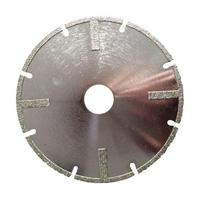
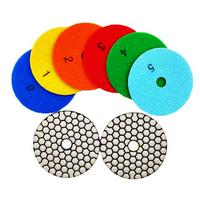
Show samples should represent the range, not the catalogue. A sintered turbo blade for porcelain and marble is a good demonstration item because edge quality is visible immediately, and a dry diamond polishing pad shows finish quality quickly on a scrap piece. The diamond saw blade category gives the range to draw samples from.
Safety
Demonstration cutting at a show is still cutting. Keep the guard fitted, wear eye protection, and confirm the blade's rpm rating against the demonstration machine. If visitors are invited to try a tool, control the area and provide PPE; a demonstration injury is a reputational event as well as a personal one.