
 ES
Returns are the point where a distributor's technical knowledge either creates value or destroys it. Handled well, a return identifies a product problem before it reaches a hundred customers. Handled badly, it becomes a credit note and a repeated failure.
An RMA process exists to make the return decision consistent, and to capture the information that makes the decision possible.
Why diamond tool returns are difficult
A worn blade is supposed to be worn. The difference between normal wear and premature failure is a judgement, and it depends on information that the customer rarely provides: what was cut, on which machine, at what speed, with what coolant.
Without that information, every return is a negotiation about goodwill. With it, most returns fall into clear categories: manufacturing defect, application error, or normal wear.
What to capture before the goods come back
Ask for four things before issuing an RMA number.
- The application. Material, machine, and whether the cut was wet or dry.
- The usage. Approximately how much was cut, and over what period.
- The symptom. What the customer observed: slow cutting, burning, chipping, a segment loss, a crack.
- The batch. The code on the blade or the packaging, so the return can be linked to production.
A photograph helps more than a description. Ask for the segment and the core, not the whole blade in a box.
Inspecting the return
The inspection has three parts: dimensional, structural, and wear pattern.
Dimensional checks confirm that the blade is what was supplied: diameter, bore, segment height, and core thickness. A blade that has been reduced in diameter by use cannot be measured against the original specification, but the segment height and the core can still be assessed.
Structural checks look for a cracked core, a segment that has separated at the weld, and a distorted bore. These are manufacturing-related unless there is evidence of impact.
The wear pattern is the most informative part. Even wear across all segments suggests normal life. Wear concentrated on one side suggests a machine alignment problem. Missing segments with clean weld scars suggest a bonding issue; missing segments with torn steel suggest an overload. The reading method is in segment loss on diamond blades.
Classifying the outcome
Four outcomes cover most cases, and each has a different commercial treatment.
- Manufacturing defect. Credit or replacement, and the batch is flagged for review.
- Application error. No credit, but the customer gets guidance. This is where technical support earns its place.
- Normal wear. No credit. The return should not have been accepted, which is a process problem rather than a product one.
- Undetermined. A partial credit or a replacement at cost, with the batch noted. Not every case can be resolved cleanly.
The classification should be recorded, not just the outcome. A pattern of application errors on one product may indicate that the packaging or the advice is misleading, which is a fixable issue.
Feeding the result back
A return that is credited and forgotten is a cost. A return that is classified and trended is information. Track the rate by product and by batch, and look for clusters.
Where a cluster appears, involve the supplier with the evidence: the inspection record, the photographs, and the batch codes. The commercial conversation is covered in warranty and claim handling, and it goes better with data than with assertions.
Where the cluster is application-related, the fix may be a change to the recommendation. A blade that is being used on the wrong material is a specification problem in the catalogue, not a manufacturing problem.
Reverse logistics
Returned tools are heavy and low-value, and the freight can exceed the credit. Set a threshold below which a return is not required and a photograph is sufficient. This reduces cost and speeds up the decision.
Where the goods do come back, quarantine them until inspected. A returned blade that goes back into stock without inspection is a future complaint.
Tooling notes
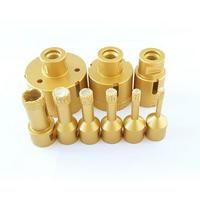
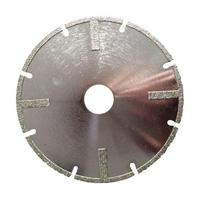
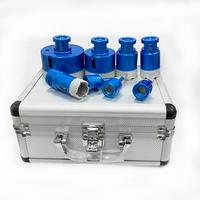
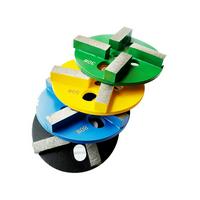
Returns are easiest to assess on products with a clear wear surface. A 125 mm diamond blade for granite, marble and concrete shows segment wear clearly, and a diamond core bit shows segment stripping in a recognisable pattern. Keep a reference piece from the same batch where possible; the comparison is faster than the specification. The relevant categories are the diamond saw blade category and the diamond drill bit category.
The conditions that indicate the tool is at the end of its life, rather than faulty, are covered in when to replace a blade, bit or cup wheel.
Safety
Inspect returned blades with gloves and eye protection, since a damaged segment can have a sharp edge. Never re-stock a blade with a distorted core or a damaged bore. Quarantine anything that has been involved in a failure at speed until it has been assessed, and dispose of cracked cores so they cannot be reused.