ES
When a segment comes off a diamond blade, the first explanation offered is usually overheating. Heat is one cause, but it is not the most informative one. The fracture surface, the condition of the neighbouring segments, and the state of the steel core say more about what actually happened.
Read the joint, not just the gap
A segment is attached to the core by sintering, brazing, or laser welding, and each joint fails differently. A clean, bright separation at the braze line suggests a bonding problem or a joint that was locally overheated. A torn, ductile fracture through the segment itself points to a sudden mechanical overload. A segment missing along with a small piece of the steel core is a much more serious event and the blade should be retired immediately.
Look at the segments on either side. If they are also cracked or undercut, the blade has been subjected to a repeated impact or to a machine with significant runout. If they are evenly worn and sound, a single local defect in that one joint is more likely.
Mechanical causes worth checking
- Impact at entry. Dropping a spinning blade onto the edge of a slab, or hitting reinforcement abruptly, loads one segment far beyond its design.
- Blade wobble. Runout makes a few segments carry the whole cut on each revolution.
- Wrong blade for the material. A hard bond in dense material forces the operator to push, which raises side loading on the joint.
- Loose flange or worn arbor. The blade flexes near the centre, fatiguing the joint area.
- Thermal shock. Intermittent water on a hot blade can do more damage than running dry at a steady temperature.
The heat buildup guide covers the temperature-driven failure path; the mechanical route described here often leaves a different-looking fracture and appears after a specific incident rather than gradually.
What to do on site
Stop the machine as soon as a change in sound or balance is noticed. Isolate it, then inspect all segments and the core around the slot. Do not continue a cut with a segment missing: the load redistributes to the remaining segments, the blade runs out of balance, and the next failure tends to be larger. The replacement criteria guide sets out when a blade should be retired rather than dressed or repaired.
Prevention is mostly setup
Choose the blade bond for the aggregate, keep the feed moderate, confirm water reaches both faces of the blade, and check the flange and arbor at every blade change. Log the incident with the material, depth of cut, and tool used; a repeated failure on the same machine is evidence of a machine problem, not a run of bad blades.
Tooling and safety
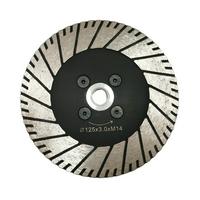
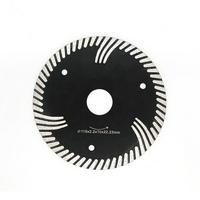
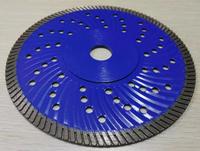
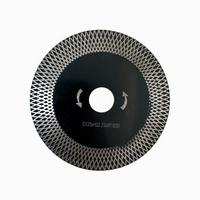
Browse the diamond saw blade category for joint types and their intended duty. A general circular cutting disc suits mixed site work, while a hot-pressed sintered blade is built for harder duty where joint integrity matters more.
Keep the guard fitted, wear eye protection, a face shield, and hearing protection, and maintain dust control or wet containment. Isolate the tool before any inspection and discard a blade with a cracked or damaged core.