ES
A competency sign-off is often a form with a list of topics and a signature at the bottom. That form proves that a conversation happened. It does not prove that the operator can drill a vertical hole without binding the bit or cut a wet line without flooding the floor.
A useful assessment observes the work, not the person's recollection of it. That means an assessor, a task, a standard, and a record.
What wet cutting actually requires
Wet cutting looks simple and has a small number of failure modes that matter: water not reaching the blade, the wrong blade for the material, a guard removed for access, and a cut made without considering what is behind the surface.
The assessment should observe four things.
- Setup. Blade rating against machine speed, guard in place, water connected and flowing before the blade turns.
- Technique. Feed rate, body position, depth per pass, and whether the operator reads the cut rather than forcing it.
- Judgement. Whether the operator stops when something changes: a new sound, a slower cut, a spray pattern that has moved.
- Housekeeping. Slurry contained, cable clear of water, area left safe.
Each of these can be observed in a single supervised cut. The assessment does not need a written exam; it needs a task that cannot be completed correctly by accident.
What core drilling actually requires
Core drilling adds setup and anchoring to the assessment. The failure modes are a rig that moves, a bit that binds, and a hole that is in the wrong place or the wrong size.
Assess the anchor first. An operator who sets a vacuum base on a dusty floor and does not test it has failed the most important part of the task, regardless of how well the hole is drilled. The setup procedure is in core drill stands and anchors.
Then assess the start. A bit that is started without a guide will walk, and an operator who starts without checking the position has not understood the tolerance. Watch whether the position is marked from a datum and checked before the bit touches the surface.
Finally assess the response to a stall. A stall is a normal event and the response is a skill: release the feed, reduce the pressure, restore the water, and restart slowly. An operator who leans on the rig when it stalls has not been assessed on this point.
Designing the assessment task
The task should be real work, not a demonstration. Choose a job that includes the difficult part: a hole in reinforced concrete, a cut in a confined position, a wet cut where the water has to be contained.
State the standard before the task. "A vertical hole within 2 mm of the mark, with no spalling on the exit face, drilled without the rig moving" is a standard. "Drills competently" is not.
Observe without intervening unless there is a safety issue. An assessor who corrects every step is assessing their own teaching, not the operator.
Recording the outcome
Record the task, the standard, the result, and any specific gaps. A record that says "competent" and nothing else is not useful at the next review, because it does not show what to develop.
Where the outcome is partial, state the specific gap and the date for reassessment. A partial sign-off with a clear gap is more honest than a full sign-off with a doubt.
Reassessment and currency
Competence fades with disuse. An operator who has not drilled for a year should be reassessed on setup, not on theory. The interval depends on the work; a crew that drills weekly needs less frequent reassessment than one that drills twice a year.
Reassess after any incident as well. An operator who has had a rig move on them needs a supervised repetition before working alone, and the record should show it.
Tooling notes
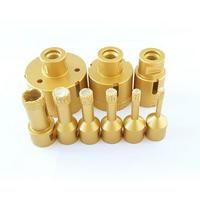
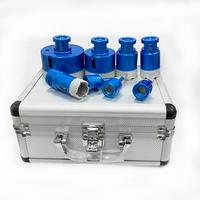
Assessment is easier with a bit that behaves consistently. A diamond core drill bit set covers the small diameters used in training, and a 5 mm to 150 mm vacuum brazed core bit range covers the larger sizes where rig setup matters most. The diamond drill bit category lists the sizes against the shank types.
The torque and rig sizing relationship, which explains why a stall is often a setup problem rather than an operator error, is covered in core drill rig torque. The electrical protection requirement for wet work is in electrical safety and RCD protection.
Safety
Assessments happen on live sites with real tools. Confirm the residual current protection before any wet work, wear eye and hearing protection, and stop the assessment immediately if the operator removes a guard or bypasses a safety device. A candidate who does that under observation has failed, regardless of the quality of the hole.