ES
A drill that copes comfortably with a 52 mm core bit can stall the moment it is asked to turn a 152 mm bit in the same wall. The motor has not changed; the leverage at the cutting edge has. Sizing a rig by bit diameter rather than by headline wattage avoids most of these failures.
Why torque rises so quickly with diameter
The cutting edge of a core bit is a ring. As diameter grows, the circumference in contact with the material grows with it, and each segment sits further from the axis. Frictional resistance therefore increases with both contact length and radius, while the available torque from the motor stays fixed for a given gear and speed.
Rotational power is torque multiplied by angular speed. A rig geared for high rpm at small diameters produces little torque at the spindle; a rig with a lower-speed gear trades speed for turning force. This is why three-speed drill rigs exist, and why using the wrong gear for a large bit feels like the tool is fighting itself.
Handheld versus stand-mounted
A handheld drill has to absorb the reaction torque through the operator's wrists. Beyond modest diameters that becomes both tiring and unsafe, particularly if the bit snags on reinforcement. A stand-mounted rig with a properly anchored base transfers the reaction into the structure and keeps the bit aligned through the full depth.
Anchoring quality matters as much as motor power. A stand that creeps under load lets the bit wander, ovalises the hole, and increases side loading on the segments. Vacuum bases work on dense, smooth surfaces; mechanical anchors are the safer choice on rough or porous concrete.
Reinforcement changes the load again
Cutting through steel bar is a different operation from cutting concrete. Feed pressure has to be reduced, speed lowered, and cooling maintained so that the segments do not overheat at the interface. The guide to drilling through reinforced concrete covers the sequence. A rig with torque reserve and a slip or clutch mechanism handles these transitions far better than one running at its limit.
Reading the specification sheet
- Rated diameter range per gear. More useful than a single maximum diameter, because it tells you where the torque is available.
- No-load and loaded rpm. A large gap between them suggests limited torque reserve.
- Spindle thread and water feed. A rig without a reliable water supply cannot sustain a large bit in dense material.
- Overload and thermal protection. These protect the motor during a bind, but they are a backstop, not a substitute for correct sizing.
- Power supply. Long extension leads reduce the voltage available at the motor and with it the torque under load.
Matching bits and rigs
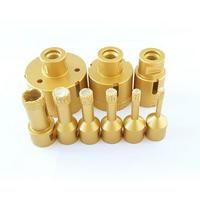
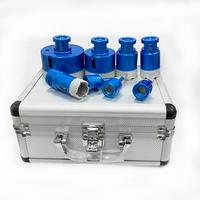
For general tile and masonry work, a vacuum brazed core drill set keeps diameter demands modest and suits a smaller rig. Where larger penetrations are needed, a wide-diameter core bit range should be paired with a low-gear stand-mounted motor and continuous water feed. Check the tool's rated speed against the bit marking using the rpm matching guide before starting.
Browse the diamond drill bit category for diameters and shank types. Clamp or anchor the stand before drilling, keep cooling water flowing, wear eye protection and hearing protection, and isolate the rig before changing a bit.