ES
Most importers evaluate samples by feel. The blade arrives, someone cuts a piece of stone, and the verdict is "seems fine". That verdict does not survive contact with a production shipment, because nothing was measured.
Control the variables
A meaningful comparison requires the same machine, the same material, the same operator, and the same cutting routine for every sample. Change any one and the result tells you about the change, not about the blade.
Material is the hardest variable to control. Use a consistent batch of stone or concrete, and record what it is. Cutting a hard granite one day and a soft limestone the next produces numbers that cannot be compared.
What to measure
- Cut time for a fixed length and depth, recorded over several cuts and averaged.
- Machine load from an ammeter, if the machine has one. A blade that draws more current is doing more work, or binding.
- Segment wear measured before and after a fixed number of cuts.
- Edge quality assessed against a reference photo, not memory.
- Operator feedback on vibration, noise, and how the blade behaves at the start of a cut.
Record all of it on one sheet per sample. A comparison across five samples with no written record becomes an opinion within a week.
Sample size and test length
One cut tells you almost nothing. A blade that performs well for the first minute may glaze, wobble, or lose a segment later. Run enough cuts to reach a steady state, and include at least one continuous run long enough to build heat.
If the blade is intended for a specific application, test that application. A general masonry blade tested on porcelain will fail for reasons that have nothing to do with its quality.
The golden sample problem
Suppliers sometimes send a hand-selected sample that is better than the production run. The differences can be segment grade, bond formulation, or simply a blade that was inspected individually.
Ask how the sample relates to production: same segment specification, same line, same inspection. Then verify on the first shipment by testing a random unit from the carton, not the one on top.
Comparing across suppliers
Compare on cost per unit of work, not on unit price. A blade that costs more but completes more cuts before replacement can be cheaper in service. Our guide to cost per cut explains the calculation.
Also compare consistency. A supplier whose samples vary between batches is harder to manage than one whose samples are slightly slower but repeatable.
Documenting the result
Keep the sample, the test sheet, and a photograph of the worn segment. When a production batch underperforms, that record is the baseline for the conversation.
Without it, the discussion becomes one person's recollection against another's.
Tooling references
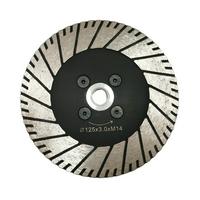
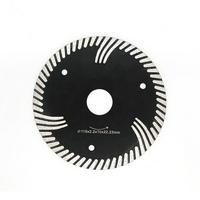
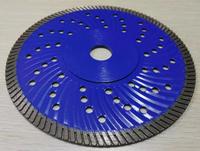
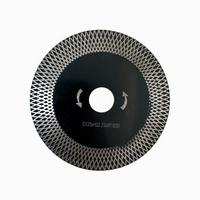
For sample selection, start from the diamond saw blade category. A 115/125 mm turbo mesh blade and a turbo cutting disc are typical items in a first sample order.
Two related reads: the wholesale tools import checklist, and quality inspection tips.
Safety note
Testing is where an unsuitable blade is most likely to fail, because it is being run at the edge of its specification. Fit the guard, match the blade's rated speed to the machine, wear eye and hearing protection, and stop immediately if the blade vibrates abnormally or loses a segment.
If you want a sample test sheet template or help interpreting results across suppliers, contact our team.