ES
An antique finish is not a dull polish. It is a deliberately worn surface — soft sheen, open texture, edges slightly rounded — and it is produced with a brush rather than a pad. The distinction matters because operators who try to reach the look with fine polishing pads end up with a patchy semi-gloss that reads as an unfinished job.
What a diamond antique brush does
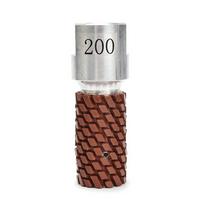
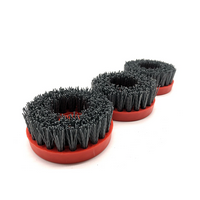
The brush carries abrasive filaments — diamond grit bonded into flexible bristles — mounted on a backing that fits a hand tool, a profile machine, or a floor machine. As the head rotates, the filament tips strike the stone surface thousands of times a minute.
That impact-abrasion mix does two things at once: it removes the saw marks and scratches left by earlier steps, and it opens the surface slightly so light scatters rather than reflecting. The result is the soft, aged look associated with antique marble, limestone, and travertine.
Stone hardness sets the expectation
Soft stones such as limestone and travertine respond quickly. A few passes at moderate grit produce visible texture, and the effect keeps developing if the operator keeps going.
Hard stones such as granite respond slowly and unevenly, because the brush works the softer minerals preferentially. On a granite with large feldspar crystals, brushing can produce a mottled surface that looks like a defect to a client expecting uniformity. Test an offcut before committing to a whole slab.
Grit and bristle choice
Coarse brushes cut deeper and produce a more rustic surface. Fine brushes give a subtler, more consistent sheen. Most antique finishes are built in two steps: a coarser brush to establish texture, then a finer brush to even it out.
Bristle length affects how much the filaments conform to edges and profiles. Longer bristles follow a bullnose or an ogee more closely; shorter bristles are more aggressive on flat surfaces.
Where the brush is the right tool
- Floor and wall tiles specified as brushed or antique finish, where the surface must read as matte but not rough.
- Stair treads and pool copings, where a slight texture improves grip without the aggressive profile of a bush hammer.
- Edge profiles, where the brushed finish has to continue around a rounded edge without a visible transition.
- Blending repairs, where a new patch has to match an aged surface.
Pressure and speed
Light pressure, multiple passes. Pressing hard drives the filaments flat, which reduces the impact action and produces an uneven scratch pattern. Speed should be moderate — high rpm makes the brush skid across the surface instead of working it.
Keep the head moving in overlapping passes, and change direction between passes so the texture does not become directional. On vertical surfaces, work from the bottom up so slurry does not run over finished areas.
Common mistakes
- Using a polishing pad to try to create an antique look. The result is a semi-gloss with swirl marks.
- Brushing a whole floor without testing on an offcut of the same stone.
- Working dry with no extraction, so the brush loads with dust and stops cutting.
- Over-brushing edges and rounding them more than the field, which shows as a visible border.
- Moving to the next step before the brush pattern is uniform.
Tooling
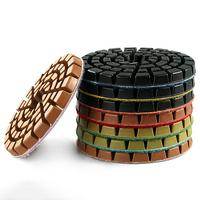
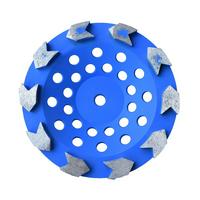
For the brushing step itself, the antique diamond masonry brush is the direct fit, and a resin bond sanding disc is the usual step before brushing when the surface still needs flattening.
Two related reads: polishing granite edges through the grit sequence, and diamond grit size explained.
Safety
Brushing produces fine stone dust and high-velocity filament debris if a brush fails. Wear eye protection, a respirator, and hearing protection, and inspect the brush for loose filaments before mounting. Keep the guard in place, match the tool's rpm to the brush rating, and work wet or with extraction to control dust.
If you are matching an antique finish to a specific stone, send a sample photo and the surface requirement and we will confirm the brush grit and sequence.