ES
Bush hammering is the one surface treatment that does not work like grinding. A grinding tool abrades; a bush hammer strikes. That difference explains why a bush hammered floor looks like stone rather than like a sanded slab, and why the tooling behaves nothing like a diamond shoe.
How the tool works
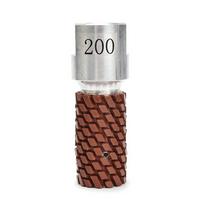
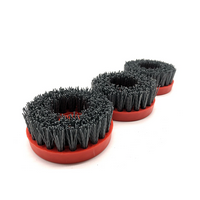
A bush hammer head carries a set of rotating rollers or a plate of carbide or diamond-tipped teeth. As the head spins, the teeth strike the surface in rapid succession, fracturing the cement paste and exposing aggregate.
Because the action is impact, the machine needs weight and stability more than high rpm. Too much speed and the teeth bounce; too little weight and they skate across the surface without biting.
Where it is used
- Anti-slip surfaces: pool surrounds, ramps, driveways, loading bays, and external stairs.
- Architectural concrete: exposed aggregate finishes where the paste is removed to reveal stone.
- Stone finishing: producing a bush hammered or antique face on granite, limestone, and basalt.
- Coating and laitance removal on surfaces where a profiled key is needed rather than a flat grind.
On pool decks and public paving, the texture depth is often specified. That means the finish is a measurable outcome, not an aesthetic choice, and the tool has to be capable of repeating it.
Roller and tooth choice
Tooth count controls texture. Fewer, larger teeth produce a deeper, coarser pattern; more, smaller teeth produce a finer, more uniform texture. On concrete, a coarse pattern exposes more aggregate and drains better. On stone, the tooth pattern determines whether the finish reads as lightly textured or heavily rustic.
Roller width matters on edges and around obstacles. A wide roller cannot reach into a corner without overstriking the adjacent surface, so most crews keep a narrow head for edges and a wide head for the field.
Pass direction and overlap
Bush hammering in one direction leaves a directional pattern. Two passes at right angles produce a more uniform texture, which is what most specifications call for. Overlap each pass by roughly a third of the head width so the edges do not show as bands.
Depth is controlled by pass count, not by pressure. Pressing harder fractures the surface unevenly and can dislodge aggregate that was holding the finish together. Additional passes give a more controlled result.
Concrete age and strength
Green concrete bush hammers unevenly: the paste is soft, aggregate pulls out, and the texture varies across the slab. Waiting for adequate strength produces a consistent finish but slows the program.
Where the schedule requires early texturing, test a small area and inspect the aggregate exposure. If it is patchy, the concrete needs more time, not more passes.
Dust and debris
Bush hammering produces chips as well as dust, and the chips travel. On exterior work, that is manageable. Indoors, it means screening the area and using extraction at the head where the tool allows it.
Silica exposure is significant because the action fractures concrete rather than cutting it. A respirator rated for the exposure, eye protection, and a face shield are appropriate. Hearing protection matters as well — the impact noise is sharper than a grinder.
Bush hammer versus ground finish
A ground finish flattens and closes the surface. A bush hammered finish opens it. For a floor that will receive a coating, grinding is usually correct because the coating needs a flat, profiled substrate. For a surface that needs grip and will stay bare, bush hammering gives a texture that grinding cannot produce.
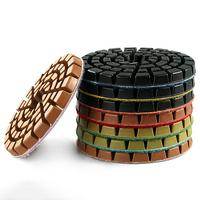
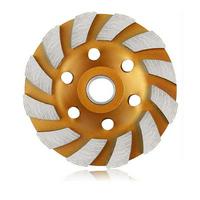
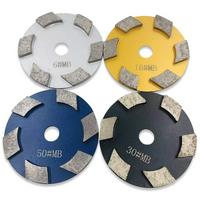
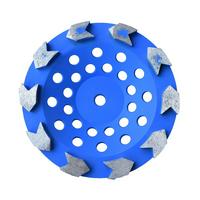
For the surrounding tooling, start from the grinding disc category. An arrow segment grinding disc handles levelling before texturing, and a 100 mm cup wheel covers edges and small areas.
Two related reads: concrete floor preparation tools, and diamond grit size explained for how abrasive size relates to surface profile.
Safety
Flying chips are the main hazard. Wear a face shield rather than open glasses, plus hearing protection, gloves, and boots. Keep bystanders out of the throw zone, check the head for cracked teeth before each use, and disconnect the machine before changing rollers.
If you are matching a texture specification to a tool, send the substrate, target depth, and area and we will confirm the tooth configuration.