
 ES
Coating failures are often described as adhesion problems. In practice they are usually profile problems: the concrete was not roughened to the degree the coating needs, or it was roughened so aggressively that the coating cannot bridge the peaks.
What CSP measures
Concrete Surface Profile is a visual and tactile scale used to describe how rough a concrete surface is, running from nearly smooth to heavily profiled. Coating and flooring manufacturers specify a CSP range for their products, and the contractor's job is to produce a surface inside that range.
The scale describes texture, not cleanliness or strength. A floor can hit the right CSP and still fail because of oil, laitance, or a weak top layer. Profile and preparation are separate requirements.
How to judge it on site
The common method is comparison against a set of reference plates or a replica tape pressed onto the surface. Both are approximations, and both depend on the operator looking at the surface in raking light rather than straight on.
A practical check: compare a freshly prepared area against the specified plate before treating the whole floor. If the profile is borderline, the coating manufacturer's technical data sheet is the authority, not the operator's judgment.
Which tooling reaches which profile
Coarse diamond tooling on a heavy floor grinder produces the deepest profiles. Fine tooling produces a smooth surface that is suitable for thin coatings but not for high-build systems that need a mechanical key.
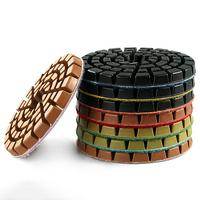
- Light profile: fine diamond shoes or sanding discs, typically for thin sealers and coatings that rely on chemical bonding.
- Medium profile: coarse diamond shoes, the standard preparation for most epoxy and polyurethane floor systems.
- Heavy profile: very coarse tooling, scarifiers, or shot blasting, used where the coating is thick, the substrate is uneven, or the service conditions are severe.
The same CSP can be reached by different methods. Grinding leaves a directional scratch; shot blasting leaves a dimpled surface. Some coatings specify the method as well as the profile, because the two surfaces behave differently under stress.
Over-processing is a real cost
Grinding past the specified profile wastes tooling, time, and concrete. It also creates a surface with deep valleys that a thin coating cannot fill, which leads to pinholes and outgassing.
The correct approach is to test, measure, and stop. A square meter of test area with a profile check costs a few minutes. Re-coating a warehouse floor costs a week.
Where profile goes wrong
- Grinding a floor that was never cleaned. Contaminants are pushed into the profile instead of removed.
- Assuming a shiny surface means a sealed surface. A glazed finish can hide laitance that will fail under a coating.
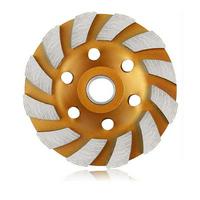
- Using a cup wheel on a small grinder for a large floor. The profile ends up uneven, with polished tracks between passes.
- Measuring in one spot. Profile varies across a slab; check several areas, especially near joints and edges.
Tooling and sequence
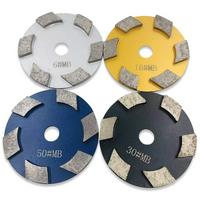
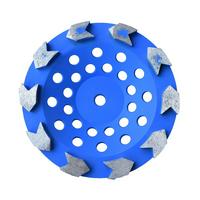
Start from the grinding disc category. A coarse arrow segment disc is the usual tool for medium to heavy profile, and a floor grinding block handles levelling and coating removal before profiling.
Two related reads: concrete floor preparation tools, and dust control when grinding concrete.
Safety
Profiling generates more dust than finishing. Use a shroud and extractor rated for the machine, a respirator appropriate to silica exposure, eye and hearing protection, and gloves. Keep the machine's guard in place and disconnect power before changing tooling.
If you are choosing tooling against a coating specification, send the CSP range and slab condition and we will confirm the grit and bond that reach it.