ES
Binding is the most common way a coring job turns expensive. It is also one of the most predictable failures in diamond drilling, because it almost always comes from one of four causes — and three of them announce themselves before the bit locks up.
Cause one: slurry packing
Water carries cuttings out of the hole. When the return path between the bit and the hole wall fills, water stops reaching the segment, cuttings accumulate at the bottom, and the bit starts to drag.
The early sign is a change in the water coming out: flow drops, and the slurry becomes thick and gritty. If you are coring dry, the equivalent sign is dust ceasing to evacuate and the motor note deepening.
Stop and flush before continuing. Pushing through a packed hole is how bits get stuck.
Cause two: misalignment
A bit that is not square to the surface cuts on one side of the rim. The load becomes uneven, the bit walks, and the hole becomes elliptical. Once the bit is wedged in an elliptical hole, it binds hard.
Check the mast in two planes at setup and re-check after the first few centimeters. If the hole is already off-line, withdrawing and restarting in the correct position is faster than forcing the bit straight.
Cause three: worn bit
A worn segment loses clearance. The steel barrel behind the segment starts contacting the hole wall, friction rises sharply, and the motor bogs. Operators often respond with more pressure, which accelerates the wear.
Measure segment height before starting a long run. A bit that is close to the barrel is a binding risk regardless of how well it cuts.
Cause four: reinforcement
Rebar does not cut like concrete. The bit slows abruptly, heat rises, and if the operator keeps pushing, the segment glazes and the bit stalls. Steel contact is covered in more detail in our guide to hitting rebar while core drilling.
The recovery sequence
When a bit binds, the instinct is to pull the trigger harder. That is the wrong move. The sequence that works:
- Release the feed and let the bit spin free for a few seconds with water running.
- If it does not free, stop the motor and withdraw using the stand's feed wheel, not by levering.
- Flush the hole, inspect the segment, and check alignment before restarting.
- If the bit is stuck in the hole, work it free with the motor off. A strap wrench on the barrel is safer than a pipe wrench on the segment.
Prevention
Use a pilot hole or a guide plate on smooth surfaces. Keep water flow adequate and check the return, not just the supply. Match bit diameter to the rig's capability. Reduce feed as the bit approaches a break-through, where the rim loses support on one side.
Tooling
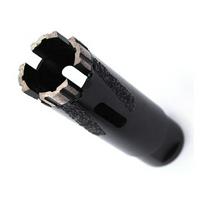
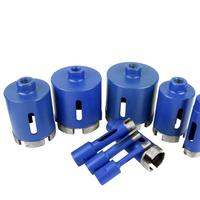
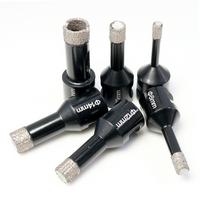
Start from the diamond drill bit category. An M14 sintered core bit is a good general choice for smaller diameters, and a turbo segment bit with a protection tooth reduces the risk of barrel contact as the segment wears.
Two related reads: hole saw troubleshooting, and drilling speed and pressure.
Safety
A binding bit can spin the rig or snap the barrel. Anchor the stand, keep hands clear, and never try to steady a bit by hand while it is under load. Wear eye protection, hearing protection, and gloves, and use RCD protection on wet work.
If you are getting repeated binding on a particular material, send the bit specification, diameter, and drilling depth and we will check whether the bit is suited to the application.