ES
The most common penetration error is a hole that fits the pipe and nothing else. Once a sleeve, insulation, or fire-stop collar is added, the hole is too tight, and enlarging a cored hole in a finished wall is a much bigger job than drilling it correctly the first time.
Start from the outside diameter
Pipe is specified by nominal size, which is not the outside diameter. A nominal 50 mm steel pipe has an outside diameter noticeably larger than 50 mm, and plastic pipe varies by pressure class.
Get the actual outside diameter from the pipe manufacturer's data before choosing a bit. Working from the nominal size is how holes end up 6 mm undersized.
Add the sleeve
Where the pipe passes through a wall or slab, a sleeve is often required so the pipe is not cast or grouted directly into the structure. The sleeve's outside diameter, not the pipe's, sets the hole size.
Allow clearance between the sleeve and the hole for grout or sealant. A sleeve that fits the hole exactly cannot be packed, and a loose sleeve will not hold a fire-stop seal.
Insulation and lagging
Insulated pipe needs a hole sized to the insulation, not the pipe. On chilled water and heating lines, the insulation thickness can be substantial, and the hole diameter grows accordingly.
Also check the bend radius of the pipe run. A hole that is adequate for a straight section may not allow the pipe to be manoeuvred into position if the run turns immediately behind the wall.
Cable bundles
A cable bundle is sized by the bundle diameter, which is larger than the sum of individual cable diameters. Add clearance for pulling, and consider the minimum bend radius — a tight hole forces a tight bend, which can damage cable insulation over time.
Where cables will be added later, a larger sleeve with a blanking plate is easier than coring again. That is a design decision, but it is worth raising before the hole is drilled.
Fire stopping and sealing
Penetrations through fire-rated elements need a tested sealing system, and the system has its own annular gap requirements. A hole that is too large may not be sealable with the specified product; a hole that is too small cannot accept the sealant.
Confirm the fire-stop detail before choosing the bit. This is the one part of penetration sizing where guessing is genuinely expensive.
Structural limits
Hole size, spacing, and distance from edges are structural questions in load-bearing elements. A row of large penetrations close together can affect the section's capacity. Get the layout reviewed rather than coring a line of holes and hoping.
Tooling
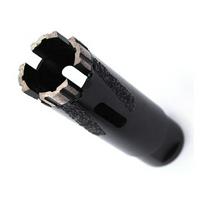
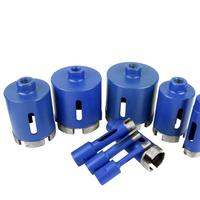
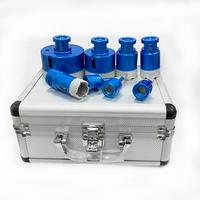
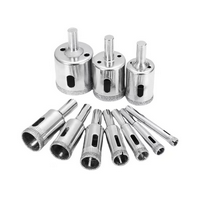
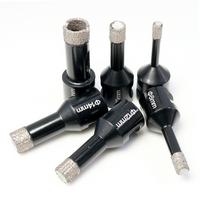
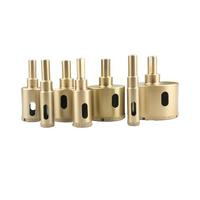
Start from the diamond drill bit category. A range of vacuum brazed core bit diameters covers most service penetrations, and a turbo segment dry core bit suits locations where water cannot be used.
Two related reads: choosing drill bit sizes, and turbo segment core bits.
Safety
Scan for existing services before coring. A penetration that intersects a cable or a gas line is a serious incident. Wear eye protection, hearing protection, and gloves, anchor the rig, and use RCD protection for wet coring.
If you are setting out a series of penetrations and need help matching diameters to pipe, sleeve, and insulation, send the schedule and we will confirm the bit sizes.