ES
A walk-behind saw set to a straight line can still come out of a thick slab with a cut that bows by several millimetres. The operator held the handle steady and the guide never moved. The blade simply found an easier path through the material.
The blade follows the softest route
Concrete is not uniform. Hard aggregate pockets, variable slab thickness, reinforcement, and cold joints all change the resistance at the segment face. If one side of the blade meets harder material, the tool steers slightly toward the other side. In a shallow cut there is not enough engagement for this to accumulate; in a deep cut the deviation compounds over the whole pass.
Feed pressure amplifies it. A blade pushed beyond its comfortable cutting rate flexes in the kerf, and the flex becomes a self-reinforcing curve. Reducing depth per pass is usually more effective than trying to steer the machine back online during the cut, which tends to bind the blade and make the wander worse.
Check the machine first
- Front and rear wheel alignment. A saw with a dragged or misaligned wheel applies a constant side force that looks like material-induced drift.
- Blade flange and arbor. Runout here makes the blade cut a wider kerf on one side.
- Blade tension and flatness. A dished core will track to one side regardless of the material.
- Guide pointer. Check that the pointer corresponds to the actual blade plane, especially after a blade change.
- Pass depth. Confirm the depth setting is consistent between passes; a sudden step-in changes loading mid-cut.
If the drift direction is the same on every cut regardless of where it is in the slab, suspect the machine. If it changes with location, suspect the material. That distinction saves a lot of unnecessary adjustment.
Working with the material
On green or variable-strength slabs, timing matters: cutting too early in a soft mix can produce raveled edges and poor tracking, as covered in the green concrete cutting guide. On cured slabs with dense aggregate, staged passes and a bond matched to the aggregate keep the blade cutting rather than rubbing. The diamond tool troubleshooting guide groups chipping, slow cutting, and wear by symptom.
Recording the drift
Measure and record how far the cut deviated, where along the run it started, and which slab section was involved. A deviation that begins at the same distance on every cut is a machine behaviour; one that follows a pour boundary or a line of reinforcement is a material behaviour. That note is more useful the next day than a recollection that the blade was pulling.
Practical corrections
Score a shallow guide pass first, then increase depth in stages with a full withdrawal between them. Keep the water or dust extraction consistent so the kerf stays clear. Where a straight line is structurally important, use a guide rail or a stand-mounted saw rather than relying on the operator to hold a line through variable aggregate.
Tooling and safety
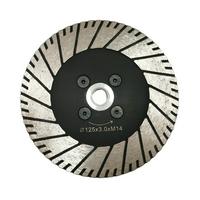
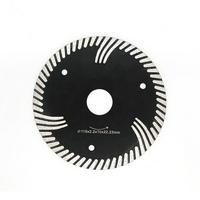
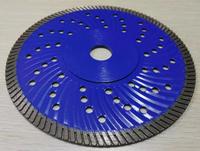
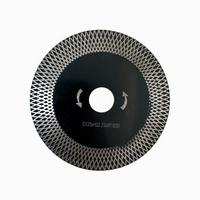
Browse the diamond saw blade category for blades with a core suited to deep cutting. A segmented general-purpose blade handles staged passes in cured concrete, while a sintered turbo blade is a better fit where dense aggregate dominates.
Keep the guard fitted, wear eye protection and hearing protection, and maintain dust control or wet slurry containment. Confirm rated rpm, and isolate the tool before changing a blade or adjusting depth.