ES
Cutting a 20 mm strip from a 20 mm slab is a different operation from cutting a worktop. The piece is thin, fragile, and often worth more per square metre than the slab it came from. Most breakages happen in the last centimetre of the cut, when the strip is loose and unsupported.
Blade choice for narrow work
A thin kerf blade removes less material, which matters because every strip you cut reduces the remaining slab. On patterned stone, kerf loss can also break a book-match, so the blade width is part of the layout calculation, not just a consumable choice.
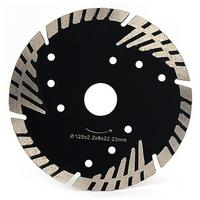
A continuous rim gives a clean edge on both the strip and the parent slab. A segmented blade cuts faster but leaves a rougher face and can catch on a narrow offcut as it separates.
Support the strip before it separates
The offcut has to be supported all the way through the cut. As the blade exits, the strip becomes a free piece with nothing holding it, and gravity or vibration takes it off the table.
Use a sacrificial board underneath, keep the table clear of slurry, and have a second person or a roller stand supporting the strip side. On very narrow pieces, a strip of double-sided tape to the board holds the piece in place until the cut is complete.
Feed and pressure
Slow, steady feed. A narrow strip has little mass and less rigidity, so any sudden load deflects it into the blade. That is how a clean cut becomes a chipped edge or a broken strip.
Reduce feed as the blade approaches the end of the cut. The last few centimetres are where the piece is least stable and where the blade is most likely to grab.
Kerf loss and layout
Calculate the strip count from the blade width before marking. A 2 mm kerf across ten strips consumes 20 mm of slab, which can be the difference between getting the last strip and not.
On a veined or patterned stone, mark the strips so the pattern continues across the installed layout. Cutting in sequence from one edge preserves the relationship; cutting from both ends does not.
Edge finishing
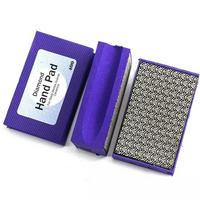
A sawn strip edge is not a finished edge. If the strip will be visible, take it through a light grind and polish before installation, while it is still flat on the bench. Polishing a 20 mm strip after it is fixed in place is slow and risky.
Common mistakes
- Cutting without supporting the offcut side.
- Using a thick blade and losing strips to kerf.
- Feeding too fast at the end of the cut.
- Cutting on a table with dried slurry, which acts like grit under the piece.
- Polishing the strip after installation instead of on the bench.
Tooling
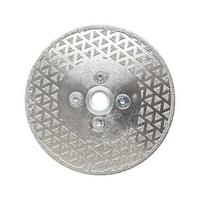
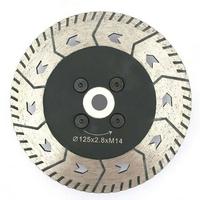
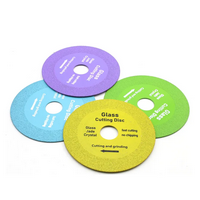
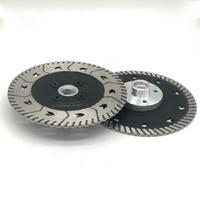
Start from the diamond saw blade category. A thin diamond blade for marble and glass suits narrow strip work, and a turbo cutting disc covers the heavier parent cuts.
Two related reads: thin diamond blades for brittle materials, and reducing chipping when cutting.
Safety
Narrow offcuts are sharp on both edges. Wear cut-resistant gloves when handling them, eye protection, and hearing protection. Keep the blade guard fitted, use RCD protection with water, and never hold a narrow strip by hand while the blade is still in the cut.
If you are producing mosaic strips and need a blade width that matches your layout, send the strip size and slab thickness and we will confirm.