
 ES
Ultra-high performance concrete does not behave like ordinary cured concrete under a diamond blade. The paste is dense, the aggregate is fine and hard, and steel fibres are distributed through the section. A blade chosen for a standard slab can rub, heat up, and lose its cutting edge well before the cut is finished.
What makes it different
In normal concrete, relatively soft aggregate fractures and the resulting swarf helps wear the bond back, exposing fresh diamond. In UHPC there is little of that abrasive action. The matrix is compact and the fibre reinforcement resists the crack propagation that makes cutting easy. The blade has to grind through a uniform, tough material instead.
Steel fibres add a second mechanism. They smear and work-harden at the segment face, loading the bond and generating heat in a way that stone aggregate does not. That combination tends to glaze a hard bond quickly.
Tooling implications
- Bond choice. A bond that wears back readily is usually more effective than a very hard one, because the dense matrix does not abrade it naturally.
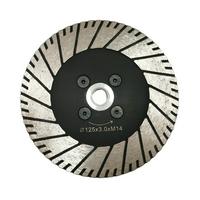
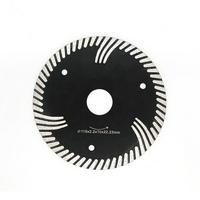
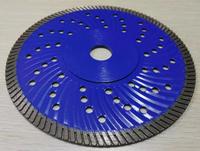
- Segment shape. Narrow or turbo-profiled segments reduce contact area and help clear swarf from the kerf.
- Wet cutting. Continuous cooling at the cut face matters more here than on a standard slab, because heat has fewer routes out of a dense section.
- Shallow passes. Step-down cutting keeps the contact arc short and gives water a chance to reach the bottom of the kerf.
The heat buildup guide describes the thermal failure modes, and the green concrete guide covers the opposite end of the strength range, where the material is soft and abrasive rather than dense and tough.
Reading the cut
A steady, slightly higher-pitched note is normal in a dense matrix. A falling note, a dark slurry, or a blade that needs increasing pressure all suggest the bond is glazing or the segment is loaded with smeared steel. Withdraw, let the blade clear, and consider dressing rather than pushing harder. The diamond tool troubleshooting guide groups these symptoms by likely cause.
Planning the work
Test on an offcut from the same pour if one exists. Fibre orientation can vary with casting method, and a cut across the fibre direction behaves differently from one along it. Record the pass depth, feed, and water flow that worked and keep them consistent for the production cuts.
Reinforcement bars and dense fibre content also increase the reaction torque, so a stand-mounted saw with a secure guide is preferable to a handheld tool on anything beyond a shallow trim.
Choosing tooling and staying safe
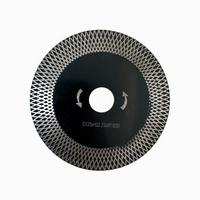
Start from the diamond saw blade category and look for blades rated for reinforced or high-strength concrete. A segmented general-purpose blade handles mixed site work, while a hot-pressed sintered turbo blade is the better candidate where heat control and a dense matrix dominate.
Keep the guard fitted, maintain water flow or dust extraction, and wear eye protection and hearing protection. Confirm the blade's rated rpm and maximum peripheral speed before starting, and isolate the tool before changing a blade.