
 ES
Given a deep slab and a deadline, the instinct is to push the blade down to full depth in one go. The cut looks faster for the first metre and then starts to wander, the motor labours, and the blade comes out discoloured. Step-down passes are slower on paper and usually quicker overall.
What a deep single pass does
Contact arc grows with depth. More segments are engaged at any moment, so the same feed force is spread over a longer cut and each segment removes less material. To keep cutting, the operator pushes harder, which raises heat without restoring cutting efficiency.
Swarf has further to travel to leave the kerf. In wet cutting, water struggles to reach the bottom of a deep slot; in dry cutting, fines pack around the segments. Either way the blade begins to rub rather than cut, and the steel core sees side loading it was not designed to carry.
A practical step-down sequence
- Score first. A shallow pass of a few millimetres establishes a straight track for later passes and reduces wandering on the finished edge.
- Increase in stages. Add depth in moderate increments, withdrawing fully between passes so the kerf clears and the segment cools.
- Keep the tool aligned. On a walk-behind saw, check the pointer and the front guide between passes rather than correcting mid-cut.
- Watch the water. Confirm flow reaches the deepest part of the cut before increasing depth again.
On reinforced concrete, treat the reinforcement zone as a separate stage. Reduce feed, keep cooling steady, and be ready for a change in sound as the segments meet steel. The green concrete cutting guide covers the timing side of early-age slabs, while the heat buildup guide explains the thermal symptoms of an overloaded pass.
How shallow is shallow enough
There is no single number that suits every material. Dense aggregate, hard stone, and a small-diameter blade all argue for smaller increments. A useful rule is to judge by the machine's response: if the motor note drops, the blade starts to drift, or the slurry darkens and thickens, the pass is too deep. Back off rather than pushing through.
Clearing the kerf between passes
Between passes, withdraw the blade fully and let it run clear for a few seconds. That flushes packed fines out of the slot and carries heat away from the core before the next engagement. On wet saws, check that water is still reaching the bottom of the deepest pass; on dry cuts, give the extractor a moment to catch up. A short pause between stages costs less than a blade that has been rubbing in a packed kerf for a full minute.
Where a full-depth pass is acceptable
Soft, thin materials and shallow cuts do not need staging. A single pass through a tile or a thin paver with a fine-rim blade is normal practice. The decision is about load, not about depth in isolation: a 20 mm pass in dense flint aggregate can be harder on the blade than a 60 mm pass in lightweight block.
Tooling and safety
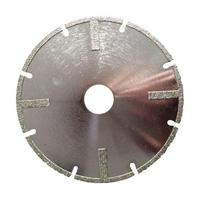
Match the blade to the material before setting the pass depth. In the diamond saw blade category, a segmented general-purpose blade suits cured concrete with staged passes, while a hot-pressed sintered turbo blade is built for harder, denser work where heat control matters.
Keep the guard fitted and adjusted, wear eye protection and hearing protection, and use dust control or wet slurry containment as appropriate. Isolate the tool before changing blades, and check rated rpm and cooling flow before starting a new depth stage.